
الْعِجْلُ الذَّهَبِيُّ
The Story of the Golden Calf: How Bani Israel Were Led Astray
At a Glance
Surah Al-Baqarah, Al-A’raf, and Ta-Ha
Musa (AS), Harun (AS), and As-Samiri
The danger of shirk and the mercy of repentance
2:51–54 • 7:148–154 • 20:85–97

The Story: Forty Nights on the Mountain
After Allah saved Bani Israel from Pharaoh, Musa (peace be upon him) was appointed to meet his Lord for forty nights on Mount Tur, to receive the guidance that would shape his people. Before leaving, he placed his brother Harun (peace be upon him) in charge, with clear instructions: keep the people on the right path and do not follow the way of the corrupters.
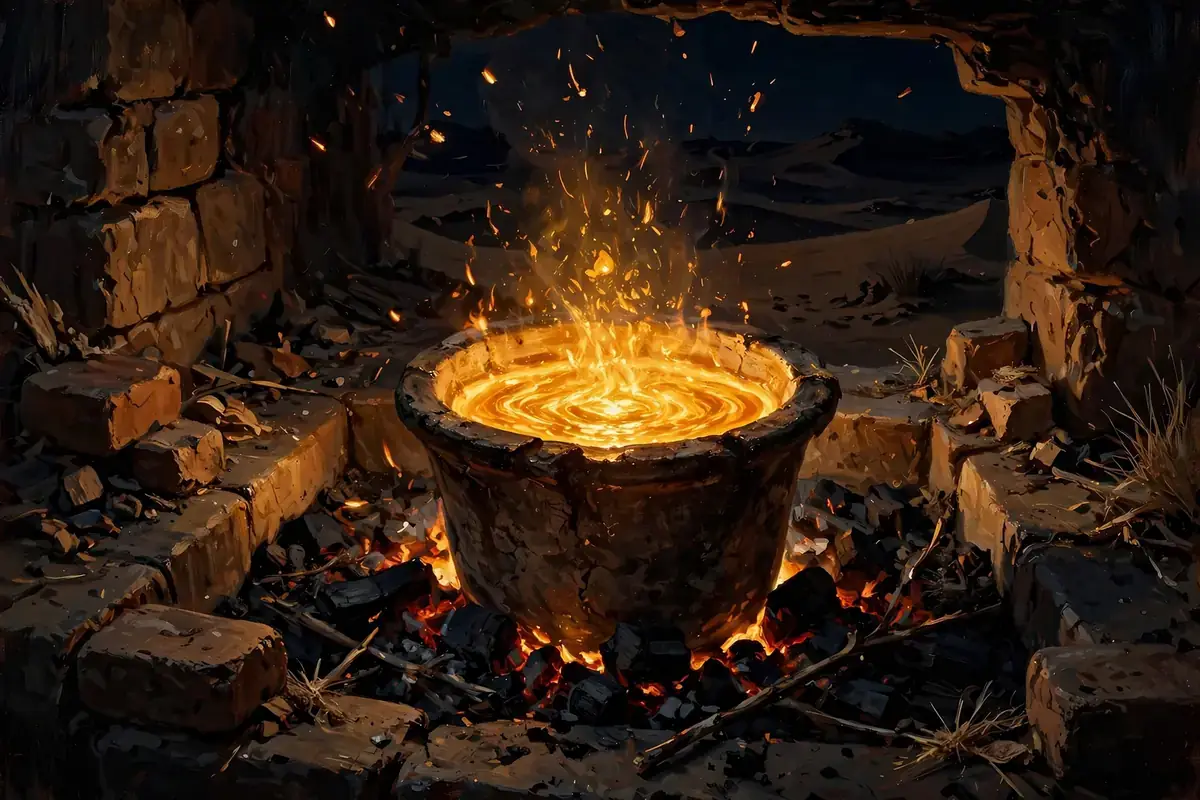
While he was away, the people were tested, and they failed. A man among them called As-Samiri took their gold ornaments, melted them down, and fashioned the image of a calf that made a lowing sound, like a cow. Then he and his followers declared: “This is your god, and the god of Musa, but he has forgotten.” In Musa’s absence of a few weeks, a people who had just witnessed the sea split before their eyes fell into worshipping a statue.
فَأَخْرَجَ لَهُمْ عِجْلًا جَسَدًا لَّهُ خُوَارٌ فَقَالُوا هَٰذَا إِلَٰهُكُمْ وَإِلَٰهُ مُوسَىٰ فَنَسِيَ
Fa akhraja lahum ‘ijlan jasadan lahu khuwar, faqaloo hadha ilahukum wa ilahu Musa fanasee.
Then he brought out for them the image of a calf that lowed, and they said: This is your god and the god of Musa, but he has forgotten. (20:88)
پس اس نے ان کے لیے ایک بچھڑے کا پتلا نکالا جس میں گائے کی آواز تھی، تو انہوں نے کہا: یہ تمہارا اور موسیٰ کا معبود ہے، مگر وہ بھول گیا۔
The Quran’s response to this is a question that cuts to the heart of idolatry: did they not see that it did not speak to them, nor could it harm or benefit them, nor guide them to any way? (20:89, 7:148). A god that cannot speak, cannot guide, and cannot even defend itself is no god at all. They took it for worship, and they were unjust, to themselves above all.
Harun’s Stand
Harun did not stay silent. Before Musa returned, he warned his people plainly: “O my people, you are only being tested by this. Your Lord is the Most Merciful, so follow me and obey my command” (20:90). But the people, swept up in the excitement, answered that they would not stop worshipping the calf until Musa returned.
When Musa came back and saw what had happened, his anger was terrible. He threw down the tablets and seized his brother by the head, pulling him toward himself. Harun pleaded: “O son of my mother, the people overpowered me and were about to kill me. Do not let the enemies rejoice over me, and do not count me among the wrongdoers” (7:150). Musa understood at once: Harun had done his duty and been nearly killed for it. He immediately prayed, “My Lord, forgive me and my brother, and admit us into Your mercy, for You are the Most Merciful of the merciful” (7:151).
The Judgment on As-Samiri
Musa then turned to As-Samiri and demanded an explanation: what had driven him to do this? As-Samiri’s answer is one of the strangest in the Quran. He said he had seen what the others did not see: he took a handful of dust from the hoofprints of the messenger’s horse, the angel Jibril’s mount, according to the tafsir, and threw it into the molten calf. “This is what my soul prompted me to do,” he said (20:96).
Musa’s judgment was swift and final. As-Samiri was cast out, condemned to a life of crying “do not touch me,” cut off from all human contact, with an appointed reckoning he could never escape. And the calf itself, the “god” they had worshipped, was burned and its remains scattered into the sea, to show the people exactly what their deity was worth (20:97).
قَالَ فَاذْهَبْ فَإِنَّ لَكَ فِي الْحَيَاةِ أَن تَقُولَ لَا مِسَاسَ ۖ وَإِنَّ لَكَ مَوْعِدًا لَّن تُخْلَفَهُ ۖ وَانظُرْ إِلَىٰ إِلَٰهِكَ الَّذِي ظَلْتَ عَلَيْهِ عَاكِفًا ۖ لَّنُحَرِّقَنَّهُ ثُمَّ لَنَنسِفَنَّهُ فِي الْيَمِّ نَسْفًا
Qala fadh-hab fa inna laka fil-hayati an taqoola la misas, wa inna laka maw’idan lan tukhlafa, wanzur ila ilahikalladhee zalta ‘alayhi ‘akifa, lanuharriqannahu thumma lanansifannahu fil-yammi nasfa.
He said: Go away, then. For you in this life it is to say: Do not touch me. And indeed, you have an appointed time you will never escape. And look at your god to which you remained devoted: we will surely burn it and scatter it into the sea completely. (20:97)
موسیٰ نے کہا: پس چلا جا، بیشک تیرے لیے زندگی میں یہ ہے کہ تو کہتا پھرے: مجھے نہ چھونا۔ اور بیشک تیرے لیے ایک وعدہ ہے جو تجھ سے پورا نہ ہو سکے گا۔ اور اپنے معبود کی طرف دیکھ جس پر تو بیٹھا رہا، ہم اسے ضرور جلائیں گے پھر اسے دریا میں بکھیر دیں گے۔
Repentance and Mercy
The story does not end with punishment. When the people saw their error and felt remorse, they said: “If our Lord does not have mercy on us and forgive us, we will surely be among the losers” (7:149). Musa commanded them to repent to their Creator, and Allah, the Most Merciful, accepted their repentance.
وَإِذْ قَالَ مُوسَىٰ لِقَوْمِهِ يَا قَوْمِ إِنَّكُمْ ظَلَمْتُمْ أَنفُسَكُم بِاتِّخَاذِكُمُ الْعِجْلَ فَتُوبُوا إِلَىٰ بَارِئِكُمْ فَاقْتُلُوا أَنفُسَكُمْ ۚ ذَٰلِكُمْ خَيْرٌ لَّكُمْ عِندَ بَارِئِكُمْ فَتَابَ عَلَيْكُمْ ۚ إِنَّهُ هُوَ التَّوَّابُ الرَّحِيمُ
Wa idh qala Musa liqawmihi ya qawmi innakum zalamtum anfusakum bittikhadhikumul-‘ijla fatooboo ila bari’ikum faqtuloo anfusakum, dhalikum khayrun lakum ‘inda bari’ikum, fataba ‘alaykum, innahu huwat-tawwabur-raheem.
And when Musa said to his people: O my people, indeed you have wronged yourselves by taking the calf for worship, so repent to your Creator and slay the guilty among yourselves. That is best for you in the sight of your Creator. Then He accepted your repentance. Indeed, He is the Accepting of Repentance, the Merciful. (2:54)
اور جب موسیٰ نے اپنی قوم سے کہا: اے میری قوم! بیشک تم نے بچھڑے کو معبود بنا کر اپنی جانوں پر ظلم کیا، پس اپنے پیدا کرنے والے کی طرف توبہ کرو اور اپنے میں سے گناہ گاروں کو قتل کرو۔ یہ تمہارے لیے تمہارے پیدا کرنے والے کے نزدیک بہتر ہے۔ پھر اس نے تمہاری توبہ قبول کی، بیشک وہ توبہ قبول کرنے والا رحم والا ہے۔
Lessons We Learn
- Shirk can enter quickly. A people who saw the sea split fell into calf worship within weeks. No one is safe from misguidance without constant guard.
- One misguided person can mislead a nation. As-Samiri alone crafted the calf, and multitudes followed him. Choose your influences carefully.
- Test everything against reason and revelation. The Quran’s question still stands: does it speak? Does it guide? Does it benefit or harm? What fails the test is not worthy of worship.
- Do not abandon the righteous leader. Harun warned them and was nearly killed for it. When truth-tellers speak, listen before the crowd drowns them out.
- Anger for Allah has its place. Musa’s fierce response shows that some wrongs deserve strong, immediate action, not soft words.
- Repentance is always open. Even after the enormity of calf worship, Allah accepted their repentance. No sin is too great for His mercy when the heart turns back.
Why This Story Matters Today
The golden calf is not just ancient history; it is a pattern. Every age has its calves: wealth, fame, ideologies, personalities, anything people begin to treat as ultimate, anything they obey without question and love without limit. The Quran’s test for a false god is devastatingly simple: can it speak to you? Can it guide you? Can it help or harm you? Whatever fails that test, however golden it looks, is a calf.
The story also warns about leadership vacuums. The moment Musa was gone, As-Samiri filled the gap. Communities, families, and individuals all need righteous guidance present and active; where it is absent, misguidance rushes in. And when the wrong happens, the story models both sides of the response: firmness against the corrupter, and mercy for those who repent.
FAQ
Who was As-Samiri?
As-Samiri was the man who led Bani Israel astray during Musa’s absence by fashioning the golden calf (20:85–87). He claimed he had taken a handful of dust from the hoofprints of the messenger’s horse and thrown it into the molten gold. Musa cast him out and condemned him to a life of isolation, crying “do not touch me” (20:97).
How did the calf make a lowing sound?
The Quran says the image of the calf had a lowing sound (20:88, 7:148) but does not explain the mechanism. As-Samiri claimed it came about through the dust he threw into it. The commentators discuss various explanations, but the Quran’s point is not how it lowed; it is that a lowing statue was worshipped as a god, which exposes the folly of idolatry.
Where was Musa when the calf was made?
Musa was on Mount Tur, where Allah had appointed him for forty nights to receive the revelation (2:51). He had left Harun in charge of the people. The calf was made during this absence, and Musa returned to find his people worshipping it.
Why did Musa seize Harun by the head?
In his anger at seeing the calf worship, Musa grabbed his brother Harun, demanding to know why he had not stopped it. Harun explained that the people had overpowered him and were about to kill him, and that he had feared causing division among the Children of Israel (7:150, 20:92–94). Musa at once understood and prayed for forgiveness for them both.
What was As-Samiri’s punishment?
Musa told him to go away, and that for the rest of his life he would cry “do not touch me,” cut off from people, with an appointed reckoning he could never escape (20:97). The calf he had made was burned and its remains scattered into the sea, showing the people the worthlessness of what they had worshipped.
Did Allah forgive Bani Israel for the calf?
Yes. When they felt remorse and admitted that without Allah’s mercy and forgiveness they would be losers (7:149), Musa commanded them to repent, and Allah accepted their repentance (2:54). The story ends with mercy: even the enormity of calf worship did not close the door of tawbah.
Final Thoughts
The golden calf lasted only a few weeks, but its lesson lasts forever. A people fresh from miracles bowed to a statue because one man filled a leadership gap with gold and noise. The Quran’s answer is timeless: test every god by whether it can speak, guide, help, or harm, and when you fall, turn back at once, because the door of repentance never closes. Guard your heart against the calves of your own age, and keep righteous company close, so that when the test comes, you stand with Harun, not with the crowd.
Continue Reading
Read the story of Qarun, another man from Musa’s people destroyed by arrogance, or Habil and Qabil. Browse all stories in the Quranic Stories hub.