
هَابِيلُ وَقَابِيلُ
Habil and Qabil: The First Sacrifice and the First Murder on Earth
At a Glance
Surah Al-Ma’idah, the 5th surah of the Quran
Habil and Qabil, the two sons of Adam (AS)
Envy, the sanctity of life, and sincerity in worship
Surah Al-Ma’idah 5:27–31

The Story: Two Offerings
Allah commands the Prophet (peace be upon him) to recite to the people, in truth, the story of the two sons of Adam. Each of them offered a sacrifice to Allah. It was accepted from one of them, and not accepted from the other. That single difference, one accepted offering and one rejected, set in motion the first murder in human history.
The Quran does not name which brother offered what, or why one was accepted. The narrations in tafsir, reported from Ibn Abbas and others, describe Habil as a shepherd who offered his finest animal, and Qabil as a farmer who offered poor-quality produce, but these details come from tradition, not from the Quranic text. What the Quran does record is the dialogue that followed, and it is the heart of the story.
When his offering was rejected, Qabil turned to his brother and said, “I will surely kill you.” Habil’s answer is one of the noblest sentences in the Quran: “Indeed, Allah only accepts from the righteous who fear Him.” He did not boast about his acceptance or mock his brother’s rejection. He pointed to the real standard: taqwa, God-consciousness. Acceptance was never about the offering itself; it was about the heart behind it.
وَاتْلُ عَلَيْهِمْ نَبَأَ ابْنَيْ آدَمَ بِالْحَقِّ إِذْ قَرَّبَا قُرْبَانًا فَتُقُبِّلَ مِنْ أَحَدِهِمَا وَلَمْ يُتَقَبَّلْ مِنَ الْآخَرِ قَالَ لَأَقْتُلَنَّكَ ۖ قَالَ إِنَّمَا يَتَقَبَّلُ اللَّهُ مِنَ الْمُتَّقِينَ
Watlu ‘alayhim naba’abnay Adama bil-haqq. Idh qarraba qurbanan fatuqubbila min ahadihima wa lam yutaqabbal minal-akhar. Qala la-aqtulannak. Qala innama yataqabbalullahu minal-muttaqeen.
And recite to them the story of the two sons of Adam in truth, when they both offered a sacrifice, and it was accepted from one of them but not accepted from the other. He said: I will surely kill you. He said: Indeed, Allah only accepts from the righteous. (5:27)
اور انہیں آدم کے دونوں بیٹوں کا قصہ سچائی کے ساتھ سناؤ، جب دونوں نے قربانی پیش کی تو ایک کی قبول کی گئی اور دوسرے کی قبول نہ کی گئی۔ اس نے کہا: میں تجھے ضرور قتل کروں گا۔ اس نے کہا: اللہ تو صرف پرہیزگاروں سے قبول کرتا ہے۔
Habil’s Refusal to Fight Back
Qabil’s threat did not shake Habil’s principles. He told his brother plainly: even if you stretch your hand toward me to kill me, I will not stretch my hand toward you to kill you, for I fear Allah, Lord of the worlds. Then he warned him of the consequence: the sin of the murder would fall on the killer, and he would be among the companions of the Fire, and that is the recompense of the wrongdoers.
This is not weakness; it is the strongest kind of strength. Habil refused to answer violence with violence, not because he could not, but because his fear of Allah was greater than his fear of his brother. His words draw the line the Quran draws everywhere: the believer does not take life unjustly, no matter the provocation.
لَئِن بَسَطتَ إِلَيَّ يَدَكَ لِتَقْتُلَنِي مَا أَنَا بِبَاسِطٍ يَدِيَ إِلَيْكَ لِأَقْتُلَكَ ۖ إِنِّي أَخَافُ اللَّهَ رَبَّ الْعَالَمِينَ
La’in basatta ilayya yadaka litaqtulanee ma ana bibasitin yadiya ilayka li-aqtulak. Innee akhafullaha rabbal-‘alameen.
If you stretch your hand toward me to kill me, I shall not stretch my hand toward you to kill you. Indeed, I fear Allah, Lord of the worlds. (5:28)
اگر تو مجھے قتل کرنے کے لیے میری طرف ہاتھ بڑھائے گا تو میں تجھے قتل کرنے کے لیے تیری طرف ہاتھ نہیں بڑھاؤں گا۔ بیشک میں اللہ سے ڈرتا ہوں جو تمام جہانوں کا رب ہے۔
The First Murder, and the Crow
But Qabil’s soul made the murder seem fair to him, and he killed his brother, becoming among the losers. The Quran’s word is precise: he became one of the khasirin, the losers, the ones who trade everything for nothing. He had destroyed his brother, his family, and his own soul in a single act.
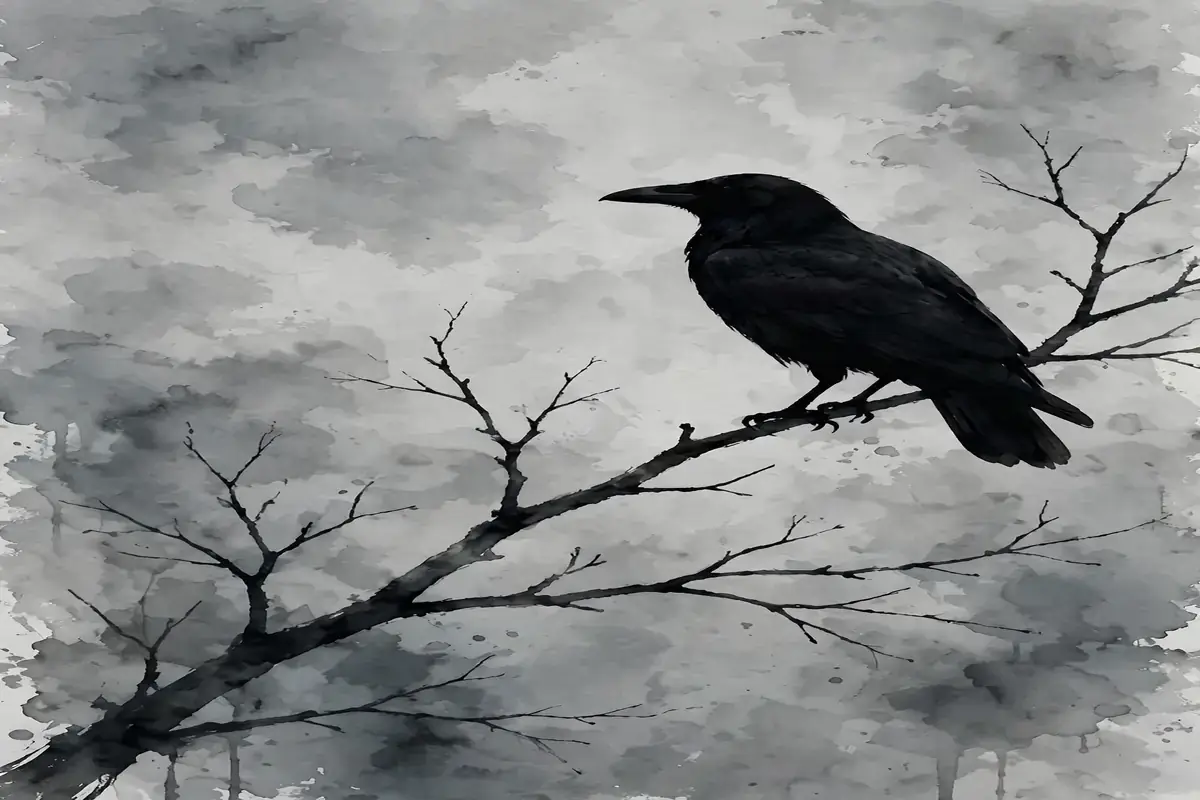
Then came the scene that gives the story its unforgettable ending. Qabil did not know what to do with his brother’s body; burial was unknown to mankind. So Allah sent a crow, scratching in the ground, to show him how to hide the body of his brother. Confronted with a bird teaching him what he did not know, Qabil cried out: “Woe to me! Have I failed to be like this crow and hide the body of my brother?” And he became among the regretful.
فَبَعَثَ اللَّهُ غُرَابًا يَبْحَثُ فِي الْأَرْضِ لِيُرِيَهُ كَيْفَ يُوَارِي سَوْءَةَ أَخِيهِ ۚ قَالَ يَا وَيْلَتَىٰ أَعَجَزْتُ أَنْ أَكُونَ مِثْلَ هَٰذَا الْغُرَابِ فَأُوَارِيَ سَوْءَةَ أَخِي ۖ فَأَصْبَحَ مِنَ النَّادِمِينَ
Faba’athallahu ghuraban yabhathu fil-ardi liyuriyahu kayfa yuwaree saw’ata akheeh. Qala ya waylata a’ajaztu an akoona mithla hadhal-ghurabi fa-uwaree saw’ata akhee. Fa-asbaha minan-nadimeen.
Then Allah sent a crow digging in the ground to show him how to hide the body of his brother. He said: Woe to me! Have I failed to be like this crow and bury the body of my brother? And he became among the regretful. (5:31)
پھر اللہ نے ایک کوا بھیجا جو زمین کھود رہا تھا تاکہ اسے دکھائے کہ اپنے بھائی کی لاش کو کیسے چھپائے۔ اس نے کہا: ہائے میری تباہی! کیا میں اس کوے جیسا ہونے سے بھی عاجز آ گیا کہ اپنے بھائی کی لاش کو چھپاؤں؟ پس وہ پچھتانے والوں میں سے ہو گیا۔
The commentators note something sobering about Qabil’s regret: it was regret at being unable to hide his crime, not true repentance for the murder itself. His remorse came too late and aimed at the wrong thing. It is a warning that regret alone, without turning back to Allah, does not undo a wrong.
Why This Story Was Revealed
The very next verse explains why Allah told this story, and it is one of the most quoted verses in the Quran: “Because of that, We decreed for the Children of Israel that whoever kills a soul, unless for a soul or for corruption in the land, it is as if he had killed all of mankind. And whoever saves one, it is as if he had saved all of mankind” (5:32). The murder of Habil became the foundation of the sanctity of life in divine law. One unjust killing carries the weight of killing humanity itself.
Lessons We Learn
- Allah accepts from the righteous. The standard of acceptance is taqwa, not the size or splendor of the deed. A small act with a sincere heart outweighs a great act with a proud one.
- Envy is the root of the first murder. Qabil could not bear his brother’s acceptance, and envy led him step by step to killing. Guarding the heart against hasad is guarding it against every evil.
- Do not answer evil with evil. Habil’s refusal to raise his hand is the Quran’s model of restraint: fear of Allah overcomes the urge for revenge.
- Life is sacred. One unjust killing is like killing all of humanity (5:32). The sanctity of life is one of the foundations of the Shariah.
- Regret is not repentance. Qabil regretted being exposed, not the murder. True repentance means turning back to Allah, not just feeling bad.
- Allah teaches even after the worst sins. He sent the crow to the murderer himself. Divine instruction and mercy continue even for those who have fallen furthest.
Why This Story Matters Today
Every act of worship we do, every prayer, every charity, every fast, passes through the test of 5:27: will Allah accept it? The answer depends not on how impressive it looks but on the taqwa behind it. Habil and Qabil remind us to check our hearts before our deeds, because the heart is where acceptance is decided.
The story is also the Quran’s first and strongest statement against envy and violence. Qabil’s path, from resentment to threat to murder, is the anatomy of every act of hatred. And 5:32, revealed on the back of this story, remains the divine charter of human life: to kill one innocent soul is to kill humanity, and to save one is to save humanity. In a violent age, there is no clearer verse.
FAQ
Who were Habil and Qabil?
Habil and Qabil were the two sons of Adam (peace be upon him), known in English as Abel and Cain. Their story is told in Surah Al-Ma’idah 5:27–31. Each offered a sacrifice to Allah; Habil’s was accepted and Qabil’s was not, and Qabil killed his brother out of envy, committing the first murder in human history.
Why was Habil’s sacrifice accepted and Qabil’s not?
The Quran gives the reason in Habil’s own words: “Indeed, Allah only accepts from the righteous” (5:27). Acceptance depends on taqwa, God-consciousness and sincerity, not on the offering itself. The narrations describe Habil offering his best and Qabil offering the poorest of what he had, but the Quranic principle is the heart behind the deed.
What did Habil say when Qabil threatened to kill him?
He said: “If you stretch your hand toward me to kill me, I shall not stretch my hand toward you to kill you. Indeed, I fear Allah, Lord of the worlds” (5:28). He also warned his brother that the sin of the murder would fall upon him and make him among the companions of the Fire (5:29).
Why did Allah send a crow to Qabil?
After the murder, Qabil did not know how to dispose of his brother’s body, since burial was unknown. Allah sent a crow scratching in the ground to show him how to bury the corpse (5:31). Seeing a bird teach him what he did not know filled Qabil with regret at his own ignorance and helplessness.
What does 5:32 mean, “as if he killed all of mankind”?
Revealed right after the story of Habil and Qabil, this verse decrees that killing one innocent soul is like killing all of humanity, and saving one life is like saving all of humanity. It establishes the sanctity of life in divine law and shows the enormity of unjust killing in Allah’s sight.
Did Qabil repent for killing Habil?
The Quran says he became among the regretful (5:31), but the commentators note that his regret was over his inability to hide the body, not true repentance for the murder. His remorse was about being exposed, not about the crime. It is a warning that feeling bad is not the same as turning back to Allah.
Final Thoughts
The first story of the children of Adam is about worship, envy, and murder, and it ends with a crow teaching a killer how to bury his brother. In a few verses, the Quran lays down the foundations of the moral life: Allah accepts only from the righteous, envy destroys the envier, life is sacred, and no regret can replace repentance. Check your heart before your deeds, guard it against hasad, and never raise your hand in injustice. Habil’s words still stand: “I fear Allah, Lord of the worlds.”
Continue Reading
Read the dua of Prophet Adam, the father of Habil and Qabil, or the story of the Golden Calf. Browse all stories in the Quranic Stories hub.