
دُعَاءُ بَعْدَ الطَّعَام
Dua After Eating: Arabic Text, Meaning, and the Promise of Forgiveness
At a Glance
Jami’ at-Tirmidhi 3458, Sunan Abi Dawud 4023
Right after finishing the meal, before leaving the table
Whoever says it has his past sins forgiven
Gratitude that turns a meal into forgiveness
The meal began with Bismillah, and the Sunnah closes it with praise. The Prophet Muhammad (peace be upon him) taught a dua to say after eating that carries one of the most generous promises attached to any short supplication: whoever says it has his past sins forgiven. Below is the dua with full Arabic text, transliteration, English and Urdu meanings, and the Sunnah etiquette that surrounds the end of a meal.
The Dua in Arabic
الْحَمْدُ لِلَّهِ الَّذِي أَطْعَمَنِي هَذَا وَرَزَقَنِيهِ مِنْ غَيْرِ حَوْلٍ مِنِّي وَلَا قُوَّةٍ
Alhamdu lillahil-ladhi at’amani hadha wa razaqanihi min ghayri hawlin minni wa la quwwah.
All praise is for Allah who fed me this and provided it for me, without any power or strength from myself.
سب تعریف اللہ کے لیے ہے جس نے مجھے یہ کھلایا اور مجھے یہ رزق دیا، میری کسی طاقت اور قوت کے بغیر۔
Jami’ at-Tirmidhi 3458 • Sunan Abi Dawud 4023 • whoever says it is forgiven his past sins
الْحَمْدُ لِلَّهِ حَمْدًا كَثِيرًا طَيِّبًا مُبَارَكًا فِيهِ، غَيْرَ مَكْفِيٍّ وَلَا مُوَدَّعٍ وَلَا مُسْتَغْنًى عَنْهُ رَبَّنَا
Alhamdu lillahi hamdan kathiran tayyiban mubarakan fih, ghayra makfiyyin wa la muwadda’in wa la mustaghnan ‘anhu rabbana.
All praise is for Allah, abundant, good, and blessed praise, never sufficed, never abandoned, never dispensable, our Lord.
سب تعریف اللہ کے لیے ہے، بہت زیادہ، پاکیزہ اور بابرکت تعریف، جو کبھی کافی نہیں، کبھی چھوڑی نہیں جا سکتی، اور جس سے کبھی بے نیاز نہیں ہوا جا سکتا، اے ہمارے رب۔
Sahih al-Bukhari 5458 • the Prophet’s praise after meals (Abu Umamah)
Meaning Explained
The heart of the dua is its final phrase: min ghayri hawlin minni wa la quwwah, “without any power or strength from myself.” The believer eats, but he did not create the food, did not grow it, did not earn it by his own might. Every link in the chain, from the seed to the table, was arranged by Allah. Saying this after a meal is honesty: the hand lifted the food, but the provision came from above.
This honesty is why the promise is so large. The Prophet said that whoever eats food and then says this dua has his past sins forgiven. Gratitude, when it is true, wipes the slate clean. The meal becomes more than nourishment; it becomes an act of worship that leaves the believer lighter than before he sat down.
The second dua, reported by Abu Umamah, is the Prophet’s own longer praise after meals. Its phrases build on each other: abundant, good, blessed, never sufficed, never abandoned, never dispensable. It is the language of someone who knows that no amount of praise can ever match the gift, and says it anyway.

Virtues and Benefits
The forgiveness of past sins for a few seconds of gratitude is among the most generous exchanges in the Sunnah. Scholars explain that it refers to minor sins, and that the condition is saying the dua with understanding and presence of heart, not as an empty reflex. Even so, the door is wide open, and every meal is a fresh chance.
The Sunnah also surrounds the end of the meal with small acts of etiquette: licking the fingers and the dish, since no one knows in which part of the food the blessing lies (Sahih Muslim 2033), and making dua for the host. If someone fed you, say: Allahumma barik lahum fima razaqtahum, waghfir lahum warhamhum, “O Allah, bless them in what You have provided them, forgive them and have mercy on them” (Sahih Muslim 2042). Begin every meal right with our dua before eating, and close it with this one.
When and How to Recite
Say the dua immediately after finishing the meal, while still at the table, before the moment passes. Say it with the meaning in mind: picture the chain of provision from the field to your plate, and let the words without any power from myself land honestly. If you were a guest, follow it with the dua for the host.
Teach it to children as the closing of every meal, just as Bismillah is the opening. A household that opens and closes its meals with remembrance turns the dining table into one of the most consistent places of worship in the home.
FAQ
What is the dua to say after eating?
Say Alhamdu lillahil-ladhi at’amani hadha wa razaqanihi min ghayri hawlin minni wa la quwwah: “All praise is for Allah who fed me this and provided it for me, without any power or strength from myself” (Jami’ at-Tirmidhi 3458). Whoever says it has his past sins forgiven.
Are all sins forgiven by the dua after eating?
Scholars explain that the promise refers to minor sins, and major sins require specific repentance. The condition is sincerity and understanding of the words. Even with that, the promise is enormous: a few seconds of true gratitude erasing a record of minor wrongs.
What dua should a guest make for the host?
Say Allahumma barik lahum fima razaqtahum, waghfir lahum warhamhum: “O Allah, bless them in what You have provided them, forgive them and have mercy on them” (Sahih Muslim 2042). It is the Sunnah’s way of repaying hospitality with something better than words of thanks alone.
Should I say the dua after snacks as well?
Yes, the hadith speaks of whoever eats food, without restricting it to full meals. Saying it after a snack or a drink of water is also rewarded. The habit matters more than the size of the meal.
What is the dua before eating?
Before eating, say Bismillah, and if you forget, say Bismillahi awwalahu wa akhirahu when you remember (Sunan Abi Dawud 3767). See our full guide on the dua before eating for details.
Final Thoughts
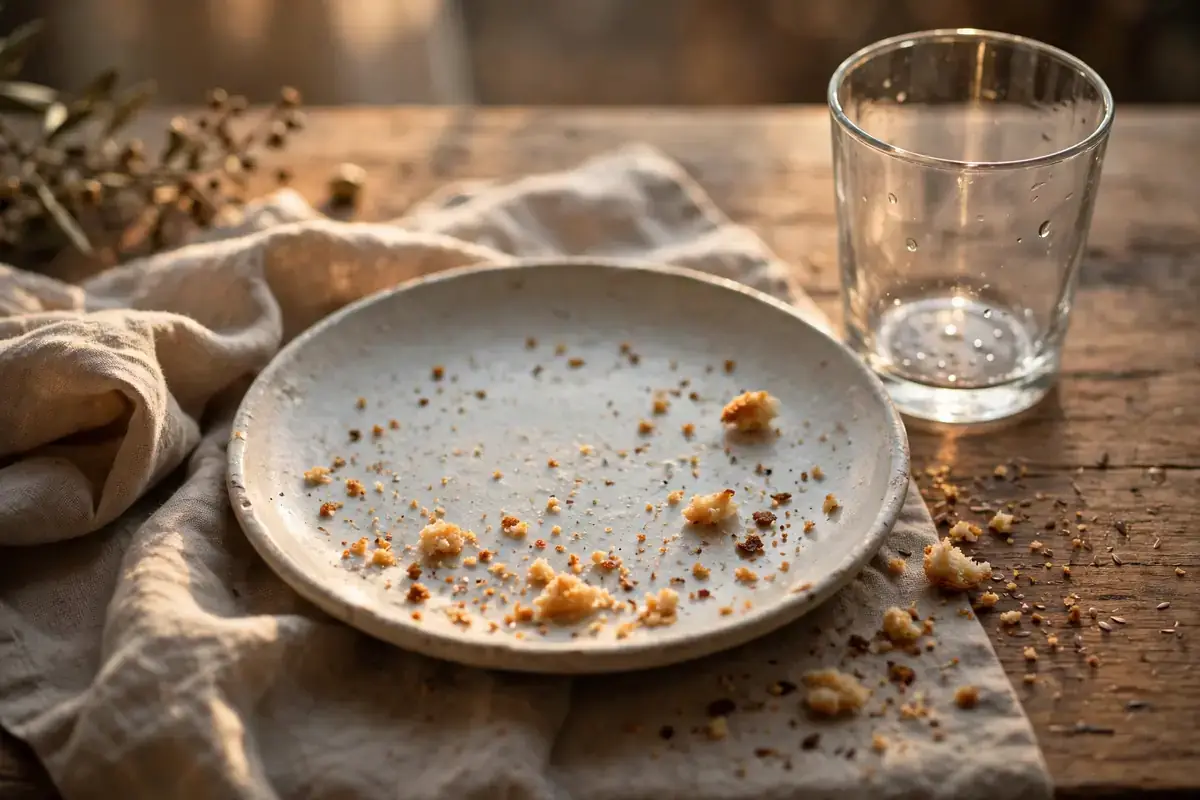
The plate is empty, but the moment is full. A few words of honest gratitude, and the meal that fed the body also cleanses the soul. Do not leave the table without them. The One who fed you without your power deserves to be praised without your delay.
Continue Reading
Begin every meal with the dua before eating and greet each morning with the dua upon waking up, or browse the full collection on the Masnoon Duas hub.