
أَوَّلُ الْوَحْي
The First Revelation: Cave Hira, Iqra, and the Beginning of Prophethood
At a Glance
One night in Ramadan, 610 CE, when the Prophet was 40 years old
The Prophet Muhammad, the angel Jibreel, Khadijah (RA), Waraqah ibn Nawfal
Cave Hira, on the mountain Jabal al-Noor, north of Makkah
The first verses of the Quran were revealed, beginning 23 years of prophethood
Background: The Years Before the Call
By the time he approached forty, Muhammad was known across Makkah as al-Amin, the trustworthy. He was a successful merchant, married to Khadijah, a respected noblewoman, and admired for his honesty and character. Yet the world around him troubled him deeply. His people worshipped idols of stone and wood, buried their infant daughters alive, drank, gambled, and oppressed the weak. The moral decay of Makkah weighed on a heart that could not accept it.
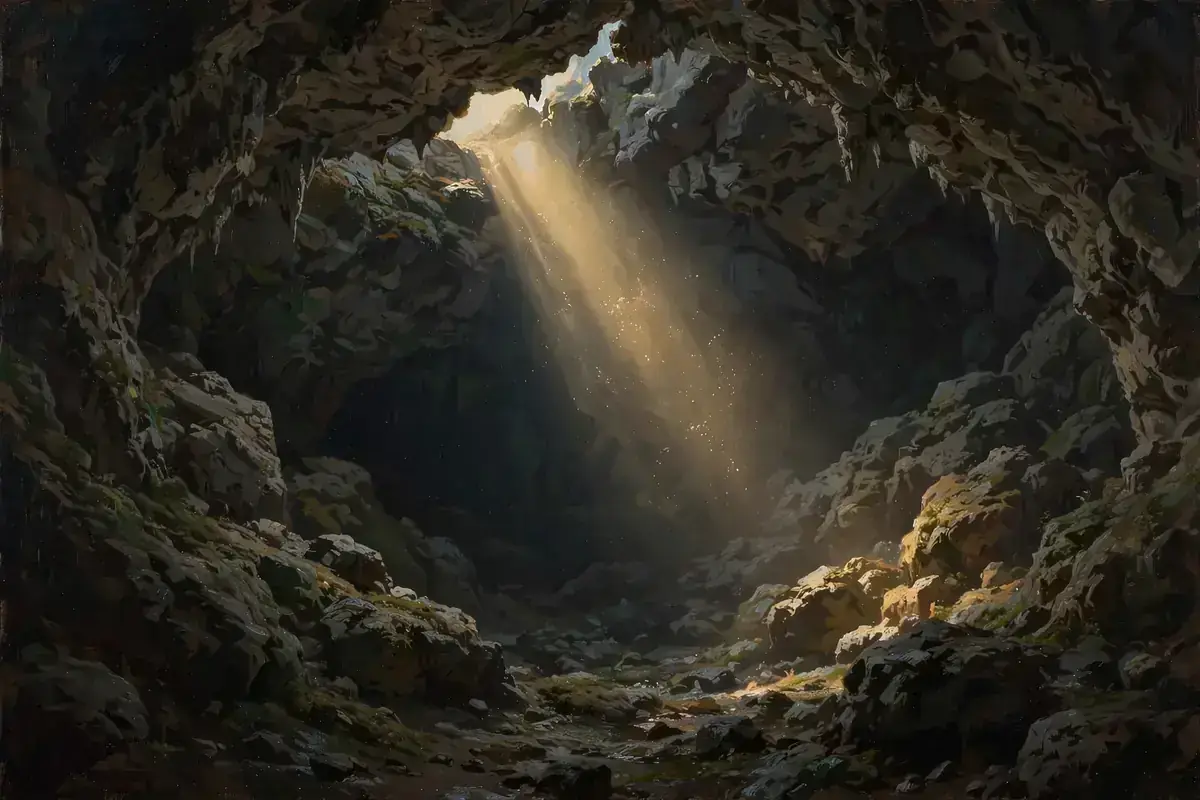
So he began to withdraw. During the month of Ramadan each year, he would take provisions and climb Jabal al-Noor, the “Mountain of Light,” to a small cave called Hira, a few miles north of Makkah. There he spent days and nights in seclusion, worshipping Allah alone and reflecting on the state of his people. His wife Khadijah supported him, bringing him food and provisions for his retreats.
The hadith of Aisha (RA) in Sahih al-Bukhari tells us that before the revelation came, the Prophet began to see true dreams, dreams that came to pass as clearly as the morning light. His heart was being prepared for something immense, though he did not yet know what it was.
What Happened: The Night of Iqra
The Angel’s Command
One night in Ramadan of 610 CE, while the Prophet was in seclusion in Cave Hira, the angel Jibreel suddenly appeared before him and said a single word: “Iqra,” read. The Prophet, who had never learned to read or write, replied, “I am not one who reads.” The angel seized him and pressed him hard until he could barely bear it, then released him and said again, “Read.” The Prophet gave the same answer, and the angel pressed him a second time, then a third.
After the third time, Jibreel released him and recited the words that would open the Quran and change human history:
اقْرَأْ بِاسْمِ رَبِّكَ الَّذِي خَلَقَ خَلَقَ الْإِنسَانَ مِنْ عَلَقٍ اقْرَأْ وَرَبُّكَ الْأَكْرَمُ الَّذِي عَلَّمَ بِالْقَلَمِ عَلَّمَ الْإِنسَانَ مَا لَمْ يَعْلَمْ
Iqra bismi rabbikalladhi khalaq. Khalaqal-insana min ‘alaq. Iqra wa rabbukal-akram. Alladhi ‘allama bil-qalam. ‘Allamal-insana ma lam ya‘lam.
Read in the name of your Lord who created. Created man from a clinging substance. Read, and your Lord is the Most Generous, who taught by the pen, taught man that which he knew not. (96:1–5)
پڑھیے اپنے رب کے نام سے جس نے پیدا کیا۔ انسان کو جمے ہوئے خون سے پیدا کیا۔ پڑھیے اور آپ کا رب سب سے زیادہ کرم والا ہے۔ جس نے قلم کے ذریعے سکھایا۔ انسان کو وہ سکھایا جو وہ نہیں جانتا تھا۔
“Cover Me, Cover Me”
The Prophet returned home trembling, the muscles between his neck and shoulders shaking. He went straight to Khadijah and said, “Zammiluni, zammiluni,” cover me, cover me. She wrapped him in a cloak and stayed with him until the fear left him. Then he told her everything that had happened in the cave.
Khadijah’s response is one of the most beautiful moments in the seerah. She did not doubt him for a moment. She told him that Allah would never disgrace him, because he kept ties of kinship, carried the burdens of the weak, helped the poor, honored his guests, and stood by the truth. The first person to believe in the Prophet was his own wife, and her faith steadied him in the most shaken hour of his life.
Waraqah’s Confirmation
Khadijah took the Prophet to her cousin Waraqah ibn Nawfal, an old man who had studied the earlier scriptures and knew Hebrew. When he heard the account of the cave, Waraqah said at once: this was the Namus, the angel of revelation, whom Allah had sent to Musa. He told the Prophet that his people would call him a liar, harm him, and drive him out, and he wished he were young enough to live to support him on that day. Waraqah died soon after, before the public call to Islam began.
After this first revelation, the divine messages paused for a period, known as the fatrah. Then revelation resumed, and it continued without long interruption for the remaining twenty-three years of the Prophet’s life, until the Quran was complete.

Key Figures
- The Prophet Muhammad: forty years old, unlettered, in retreat at Cave Hira when the call came.
- Jibreel (AS): the angel of revelation, who brought the first five verses of Surah Al-Alaq.
- Khadijah (RA): the Prophet’s wife, the first believer, whose calm faith carried him through the shock of that night.
- Waraqah ibn Nawfal: the learned cousin of Khadijah who identified the visitor as the angel sent to Musa and foretold the opposition to come.
Lessons and Legacy
The first word of the Quran is a command to read, and it was given to a man who could not read. That is no accident. It shows that the Quran is not the Prophet’s own composition, and it places knowledge, the pen, and learning at the very center of Islam. The first five verses honor Allah as the Creator, the Most Generous, the Teacher by the pen, and they dignify the human being as a creature worth teaching.
The story also shows the human side of revelation. The Prophet was frightened, and Allah did not leave him alone with that fear. He gave him Khadijah, whose immediate belief was itself a mercy, and Waraqah, whose knowledge confirmed what had happened. From this night began the mission that would carry the message from a cave in Makkah to the Hijrah to Madinah twelve years later, and from there to the world.
The Quran’s own account of the event’s weight appears in Surah Al-Muzzammil, revealed soon after, when Allah addressed His Messenger as “the one wrapped in garments” and told him, “Indeed, We will cast upon you a heavy word” (73:5). The seerah that follows in this Islamic history series is the story of that heavy word being carried, verse by verse, for twenty-three years.
FAQ
What were the first words revealed of the Quran?
The first revealed words were the opening of Surah Al-Alaq (96:1–5): “Read in the name of your Lord who created…” The angel Jibreel recited them to the Prophet in Cave Hira after commanding him three times to read. This is recorded in Sahih al-Bukhari in the hadith of Aisha (RA).
How old was the Prophet when he received the first revelation?
He was forty years old. The revelation came in 610 CE, during the month of Ramadan, while he was in seclusion in Cave Hira on Jabal al-Noor. Revelation then continued for twenty-three years until his passing.
Who was the first person to believe in the Prophet’s message?
Khadijah (RA), his wife, was the first to believe. When he came home trembling from the cave, she comforted him, reminded him of his noble character, and assured him that Allah would never disgrace him. She accepted Islam immediately, before anyone else.
What did Waraqah ibn Nawfal say about the revelation?
Waraqah, a scholar of the earlier scriptures, identified the Prophet’s visitor as the Namus, the angel of revelation whom Allah had sent to Musa. He confirmed that Muhammad was a prophet and warned that his people would oppose him and drive him out.
Why did revelation pause after the first verses?
After the first revelation there was a pause known as the fatrah, the interval. The Prophet longed for the revelation to return, and when it resumed, with the opening verses of Surah Al-Muddaththir, it came steadily and did not stop again in this way.
Final Thoughts
“Read.” One word, given to an unlettered man in a dark cave, became the first light of a guidance that now reaches billions. The first revelation teaches us that Islam begins with knowledge, that Allah prepares hearts before He entrusts them, and that even the Prophet needed comfort in his hardest hour, and found it in the faith of Khadijah. Every verse of the Quran that followed stands on the foundation of that night in Hira.
Continue Reading
See how the early Muslims held firm under persecution in the migration to Abyssinia, or return to the Islamic history timeline to follow the seerah from the beginning.