
هُودٌ عَلَيْهِ السَّلَامُ
Prophet Hud (AS) and the People of ‘Ad
At a Glance
7 times by name; the 11th surah of the Quran is named Surah Hud
Sent to the mighty ‘Ad, destroyed by a violent wind after rejecting him
Power and wealth never protect a people who mock the truth
Hud (11), Al-A’raf (7), Ash-Shu’ara (26), Al-Ahqaf (46)

His Story
After the flood of Prophet Nuh (AS), humanity began again, and within a few generations a new civilization rose in southern Arabia: the ‘Ad. They were everything a nation could want to be, tall, strong, wealthy, master builders of monuments “the like of which were never created in the land” (89:7–8). The Quran calls their city Iram of the pillars. And they were destroyed so completely that only their dwellings remained. Between their rise and their ruin stands one man: Hud (AS), their brother, their prophet, their final warning.
The Might of ‘Ad
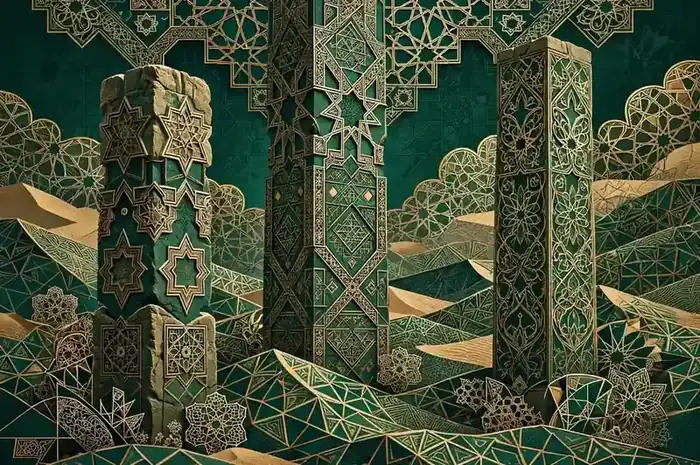
The Quran describes the ‘Ad as successors to the people of Nuh, settled in al-Ahqaf, the wind-curved sand dunes (46:21). Allah had “increased them in stature extensively” and given them strength, and they knew it. Their boast is preserved word for word: “Who is mightier than us in strength?” (41:15). They built lofty monuments on every high place, “amusing yourselves,” and constructed fortresses hoping to live forever (26:128–129). When they seized anyone, they seized with tyrannical force (26:130). Strength had become their religion, and their idols were the decoration on it.
Hud’s Call
“And to ‘Ad, their brother Hud” (7:65). The Quran stresses he was one of them, not a stranger, so they could not dismiss him as an outsider. His message was the same one every prophet carried: “O my people, worship Allah; you have no god besides Him” (7:65). But Hud added something tailored to a prosperous people. He told them to seek their Lord’s forgiveness, and Allah would send rain upon them in showers and increase their strength (11:52). Repentance, he promised, would not cost them their prosperity. It would multiply it.
He reminded them of the blessings they were squandering: Allah had made them successors after the people of Nuh and increased them in stature, so they should remember Allah’s favors and not spread corruption on earth (7:69). Every argument Hud made was an invitation, not just an accusation. He wanted them saved, not humiliated.
The Rejection
The leaders of ‘Ad answered with contempt. They called Hud a foolish, lying man (7:66), accused him of being possessed or cursed by their gods (11:53–54), and mocked his promise of resurrection: who could believe that rotten bones would live again? (23:33–37). When warnings did not move them, they issued a challenge: “Bring us what you threaten us with, if you are truthful” (46:22). It is one of the most chilling sentences in the Quran, a people demanding their own punishment as proof.
Hud’s response to their threats is a masterclass in trust. He declared himself free of their idols and told them plainly: “Plot against me, all of you together, and give me no respite. I have placed my trust in Allah, my Lord and your Lord” (11:54–56). One man, against an entire warrior nation, inviting them to do their worst. That is what tawakkul looks like when it leaves the tongue and enters the chest.
The Punishment
First came the drought. The skies withheld their rain, and the ‘Ad grew desperate. Then they saw a dense cloud moving toward their valleys, and they rejoiced: “This is a cloud bringing us rain!” But Hud told them the truth: “No, it is what you sought to hasten, a wind carrying a painful punishment” (46:24). The cloud was not mercy. It was the answer to their challenge.
The wind Allah sent is described with terrifying precision: a “screaming, violent wind” imposed on them for seven nights and eight days in succession, leaving the people fallen “as if they were hollow trunks of palm trees” (69:6–7). It destroyed everything by its Lord’s command, until nothing remained of them except their dwellings (46:25). The monuments they built to live forever outlived them as empty shells, exactly as the Quran said they would become.
And Hud? “When Our command came, We saved Hud and those who believed with him, by mercy from Us” (11:58). The same wind that erased a civilization did not touch the believers. Mercy and punishment passed through the same storm, and each found its appointed people.
Key Verses About Prophet Hud
وَلَمَّا جَاءَ أَمْرُنَا نَجَّيْنَا هُودًا وَالَّذِينَ آمَنُوا مَعَهُ بِرَحْمَةٍ مِّنَّا وَنَجَّيْنَاهُم مِّنْ عَذَابٍ غَلِيظٍ
Wa lamma ja’a amruna najjayna Hudan walladhina amanu ma’ahu birahmatin minna wa najjaynahum min ’adhabin ghaliz.
When Our command came, We saved Hud and those who believed with him, by mercy from Us, and We saved them from a harsh punishment. (11:58)
اور جب ہمارا حکم آ پہنچا تو ہم نے ہود کو اور جو اس کے ساتھ ایمان لائے تھے، اپنی رحمت سے نجات دی، اور انہیں سخت عذاب سے بچا لیا۔ (11:58)
وَأَمَّا عَادٌ فَأُهْلِكُوا بِرِيحٍ صَرْصَرٍ عَاتِيَةٍ
Wa amma ’Adun fa-uhliku birihin sarsarin ’atiyah.
And as for ‘Ad, they were destroyed by a furious, bitter wind. (69:6)
اور عاد کو تیز و تند، سخت سرد آندھی سے ہلاک کر دیا گیا۔ (69:6)
Character and Virtues
Hud’s defining virtue is courage rooted in trust. He stood alone before a nation of warriors and invited them all to plot against him without fear (11:55–56). That is not recklessness; it is the logical outcome of truly believing that “there is no creature but that He holds its forelock” (11:56). If Allah controls every forelock, no plot can move without His permission.
He was also remarkably free of self-interest. Like every prophet, he told his people, “I do not ask you for any reward; my reward is only from the Lord of the worlds” (26:127). And he was patient in the truest sense: he kept calling, kept warning, and kept hoping, even while his people called him a liar to his face.
Lessons for Us
- Strength is a trust, not a proof. The ‘Ad thought their muscles proved they were right. Power proves nothing about truth; it only increases responsibility.
- Prosperity can be a test. Hud promised that repentance would increase their blessings. They chose their blessings over the One who gave them, and lost both.
- Never mock the warning. “Bring us what you threaten us with” is the sentence of a people who confused Allah’s patience with His absence.
- Trust Allah openly. Hud’s challenge to his enemies, “plot against me, all of you,” shows what real tawakkul sounds like: calm, public, and unafraid.
- Repentance multiplies blessings. Hud’s offer stands for every prosperous person: seek forgiveness, and Allah sends rain and increases strength (11:52).
FAQ
Who were the people of ‘Ad?
The ‘Ad were a powerful ancient Arabian nation who lived after the time of Prophet Nuh in al-Ahqaf, a region of wind-shaped sand dunes in southern Arabia (46:21). They were known for their great physical strength, tall stature, and monumental architecture, including what the Quran calls “Iram of the pillars” (89:7). They were destroyed after persistently rejecting Prophet Hud.
How were the people of ‘Ad destroyed?
Allah sent against them a furious, freezing wind that lasted seven nights and eight days (69:6–7). The Quran describes the people left fallen like hollow trunks of uprooted palm trees. Their dwellings remained as empty ruins (46:25). Prophet Hud and the believers with him were saved by Allah’s mercy (11:58).
What was Hud’s message to his people?
His core message was the same as every prophet’s: worship Allah alone, with no partners (7:65). He also urged them to seek forgiveness, promising that Allah would send abundant rain and increase their strength (11:52), and he reminded them of Allah’s favors to warn them against corruption (7:69).
Why did the ‘Ad mistake the punishment for rain?
They had been suffering a severe drought, so when they saw a dense cloud approaching their valleys, they rejoiced and said, “This is a cloud bringing us rain” (46:24). Hud corrected them: it was the punishment they had demanded. Their desperation made them misread the sign, a warning about seeing what we want to see.
Is Surah Hud named after Prophet Hud?
Yes, the 11th surah of the Quran is named Surah Hud, and it contains the fullest account of his story (11:50–60), alongside the stories of Nuh, Salih, Ibrahim, Lut, Shu‘ayb, and Musa. His story also appears in Al-A’raf (7:65–72), Ash-Shu’ara (26:123–140), and Al-Ahqaf (46:21–25).
Final Thoughts
The ‘Ad asked, “Who is mightier than us?” and the wind answered. Their pillars still stand in the Quran as a question for every powerful age, including ours: what will you do with your strength? Hud (AS) showed the alternative, one honest man trusting Allah in front of a nation that trusted its muscles. When the storm comes, and storms always come, only one of those trusts holds.
Continue Reading
Meet Prophet Salih (AS), sent to the Thamud who carved homes into mountains, or Prophet Nuh (AS), who came before him, or return to the Stories of the Prophets hub.