
إِسْمَاعِيلُ عَلَيْهِ السَّلَامُ
Prophet Ismail (AS): The Patient Son of the Sacrifice
At a Glance
12 times in the Quran, including Maryam, Al-Baqarah, and As-Saffat
Helped his father Ibrahim raise the foundations of the Kaaba
Patience and truthfulness to one’s word, even at the greatest cost
Maryam (19), Al-Baqarah (2), As-Saffat (37), Ibrahim (14)

His Story
Ismail (AS) is the son every parent hopes to raise and every believer hopes to resemble. The Quran gives him a title no other prophet receives in the same words: sadiq al-wa‘d, “true to his promise” (19:54). His life holds three scenes that shaped Islamic history forever: the sacrifice he accepted with a calm heart, the valley of Makkah where he grew up beside the well of Zamzam, and the Kaaba he built with his father Ibrahim (AS), stone upon stone, prayer upon prayer.
The Son of the Sacrifice
After years without children, Ibrahim prayed for a righteous son, and Allah gave him glad tidings of a forbearing boy (37:100–101). When the boy grew old enough to work alongside his father, Ibrahim shared his dream: “O my son, I see in a dream that I am sacrificing you, so consider what you think.” The boy did not panic, did not argue, and did not run. “O my father, do as you are commanded,” he said. “You will find me, Allah willing, among the patient” (37:102).
Pause on that answer. A child is told his father has dreamed of sacrificing him, and his response is to comfort the father and submit to Allah. Both of them “submitted,” the Quran says, and Ibrahim laid him down (37:103). Then Allah called out that the vision had been fulfilled, and ransomed the boy “with a great sacrifice” (37:104–107). The Quran does not name the son in this passage; the majority of scholars hold it was Ismail, and Allah knows best. Either way, the boy’s patience became the definition of the word for every generation after him.
The Valley of Makkah
The Quran tells us that Ibrahim settled “some of his offspring in an uncultivated valley near Your sacred House” (14:37). His dua for them is preserved: “Our Lord, so that they may establish prayer, make the hearts of people incline toward them, and provide them with fruits, so that they may be grateful.” That barren valley was Makkah, and the offspring were Ismail and his mother, Hajar.
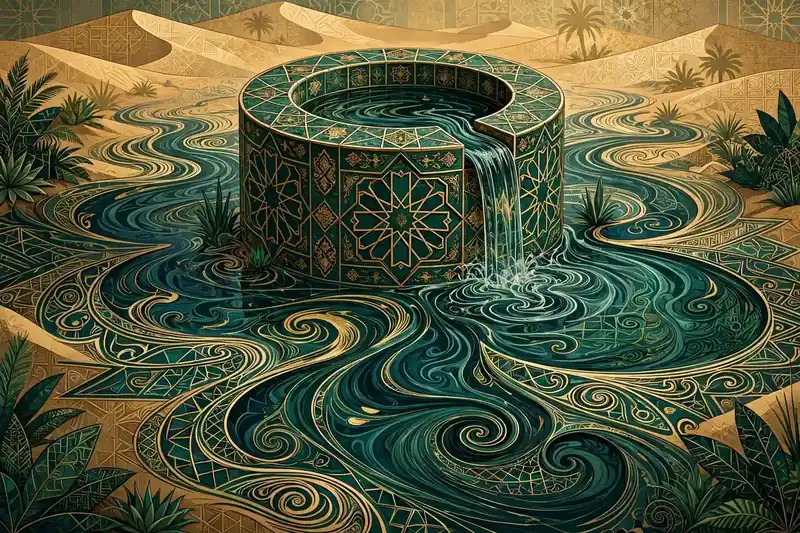
The rest of the valley’s story, the running between Safa and Marwa and the gushing of the Zamzam well, comes to us through hadith and seerah tradition rather than the Quran’s text. According to those reports, when their water ran out, Hajar ran seven times between the two hills searching for help, and water sprang from the ground near the infant Ismail, becoming the well of Zamzam that flows to this day. The Quran’s own contribution is the deeper frame: a father’s dua in a desert, answered with a city, a well, and a House that would draw millions.
Raising the Kaaba
When Ismail was grown, Allah commanded Ibrahim to build the House, and father and son raised its foundations together (2:127). Picture it: the old prophet lifting stones, the young prophet handing them up, both repeating the same prayer with every course they laid: “Our Lord, accept this from us. You are the All-Hearing, the All-Knowing.” They prayed to be made submissive, for a submissive nation from their descendants, and for a messenger to teach that nation (2:128–129). The Kaaba still stands on those foundations, and the messenger they prayed for came: Prophet Muhammad ﷺ, a descendant of Ismail.
Allah also commanded the two of them to purify the House “for those who circle it, those who seclude themselves in it, and those who bow and prostrate” (2:125). From its first stones, the Kaaba was built for one purpose: the worship of Allah alone, open to every believer who would come.
Key Verses About Prophet Ismail
فَلَمَّا بَلَغَ مَعَهُ السَّعْيَ قَالَ يَا بُنَيَّ إِنِّي أَرَىٰ فِي الْمَنَامِ أَنِّي أَذْبَحُكَ فَانظُرْ مَاذَا تَرَىٰ ۚ قَالَ يَا أَبَتِ افْعَلْ مَا تُؤْمَرُ ۖ سَتَجِدُنِي إِن شَاءَ اللَّهُ مِنَ الصَّابِرِينَ
Falamma balagha ma’ahus-sa’ya qala ya bunayya inni ara fil-manami anni adhbahuka fanzur madha tara, qala ya abati-f’al ma tu’mar, satajiduni in sha’allahu minas-sabirin.
When the boy reached the age of working with him, he said, “O my son, I see in a dream that I am sacrificing you, so consider what you think.” He said, “O my father, do as you are commanded. You will find me, Allah willing, among the patient.” (37:102)
پھر جب وہ اس کے ساتھ دوڑ دھوپ کی عمر کو پہنچا تو اس نے کہا: اے میرے بیٹے! میں خواب میں دیکھتا ہوں کہ میں تمہیں ذبح کر رہا ہوں، تو غور کرو تمہاری کیا رائے ہے؟ اس نے کہا: اے میرے ابا! جو آپ کو حکم دیا گیا ہے وہ کیجیے، آپ مجھے ان شاء اللہ صبر کرنے والوں میں سے پائیں گے۔ (37:102)
وَاذْكُرْ فِي الْكِتَابِ إِسْمَاعِيلَ ۚ إِنَّهُ كَانَ صَادِقَ الْوَعْدِ وَكَانَ رَسُولًا نَّبِيًّا
Wadhkur fil-kitabi Isma’il, innahu kana sadiqal-wa’di wa kana rasulan nabiyya.
And mention in the Book, Ismail. He was true to his promise, and he was a messenger and a prophet. (19:54)
اور کتاب میں اسماعیل کا ذکر کیجیے۔ بے شک وہ وعدے کا سچا تھا اور رسول اور نبی تھا۔ (19:54)
وَإِذْ يَرْفَعُ إِبْرَاهِيمُ الْقَوَاعِدَ مِنَ الْبَيْتِ وَإِسْمَاعِيلُ رَبَّنَا تَقَبَّلْ مِنَّا ۖ إِنَّكَ أَنتَ السَّمِيعُ الْعَلِيمُ
Wa idh yarfa’u Ibrahimul-qawa’ida minal-bayti wa Isma’il, rabbana taqabbal minna, innaka antas-sami’ul-’alim.
And when Ibrahim was raising the foundations of the House with Ismail, praying, “Our Lord, accept this from us. You are the All-Hearing, the All-Knowing.” (2:127)
اور جب ابراہیم اور اسماعیل بیت اللہ کی بنیادیں اٹھا رہے تھے (اور کہہ رہے تھے): اے ہمارے رب! ہم سے قبول فرما، بے شک تو ہی سننے والا، جاننے والا ہے۔ (2:127)
Character and Virtues
Ismail’s Quranic portrait is built from two words: patient and truthful. His patience was proven at the moment of the sacrifice, when he comforted his father instead of pleading for himself. His truthfulness to promises (19:54) is explained by scholars as a lifelong trait: he never made a promise to Allah or to people except that he fulfilled it. The Quran adds that he used to command his family to prayer and charity, and “he was pleasing to his Lord” (19:55). A prophet’s first congregation is his household, and Ismail led his well.
He was also a worker. He did not only receive the Kaaba as a legacy; he built it with his own hands, carrying stones to his aging father. Prophethood in Ismail’s life looks like service: serving Allah’s command as a boy, serving his mother’s trust in the valley, and serving his father’s project stone by stone.
Lessons for Us
- Submit with a calm heart. Ismail’s “do as you are commanded” is the model response to a difficult divine decree: no panic, no bargaining, just trust.
- Keep your promises. Allah named Ismail “true to his promise” as his defining title. A kept promise is a form of worship.
- Lead your family first. Ismail commanded his household to prayer and charity (19:55). Da’wah begins at home.
- Work with your hands for Allah. He carried the stones of the Kaaba himself. Sacred work is still work.
- Trust Allah in barren places. A desert valley became Makkah because a father made dua and a mother and son trusted. Your “uncultivated valley” can bloom the same way.
FAQ
Who was Prophet Ismail?
Prophet Ismail (AS) was the son of Prophet Ibrahim (AS) and Hajar. The Quran describes him as “true to his promise” and “a messenger and a prophet” (19:54). He is known for his patience at the sacrifice (37:102), growing up in the valley of Makkah, and building the Kaaba with his father (2:127). He is the ancestor of Prophet Muhammad ﷺ.
Was Ismail the son in the sacrifice story?
The Quran does not name the son in 37:99–113. The majority of Muslim scholars hold it was Ismail, while some hold it was Ishaq, and Allah knows best. The Quran’s emphasis is on the submission of father and son and on Allah’s mercy in ransoming the boy with “a great sacrifice” (37:107).
What is the story of Zamzam?
The Quran says Ibrahim settled some of his offspring in an uncultivated valley near the sacred House and prayed for them (14:37). The detailed account, Hajar running seven times between Safa and Marwa and water gushing near the infant Ismail, comes from hadith and seerah tradition. The well of Zamzam in Makkah flows to this day, and pilgrims still run between the two hills in her memory.
Did Ismail help build the Kaaba?
Yes. “When Ibrahim was raising the foundations of the House” (2:127), both prayed for Allah to accept their work. Allah also commanded them to purify the House for worshippers (2:125). Their joint dua during the building asked for a submissive nation from their descendants and for a messenger to teach them (2:128–129).
What does “true to his promise” mean?
The title sadiq al-wa‘d (19:54) means Ismail never broke a promise, whether to Allah or to people. Scholars explain it as a comprehensive trait: his word was his bond in worship, in family life, and in dealings. The Quran singles it out as his defining virtue.
Final Thoughts
Ismail (AS) said “do as you are commanded” when the command was his own life, and Allah gave him life, a well, a city, and a House instead. His story is the Quran’s answer to everyone who fears that obedience will cost them everything: it costs you what you were holding too tightly, and it gives you what you could never have built alone. Be patient like Ismail, keep your promises like Ismail, and build your Kaaba, whatever it is, stone by stone.
Continue Reading
Meet Prophet Ibrahim (AS), his father, or Prophet Ishaq (AS), his brother, or return to the Stories of the Prophets hub.