
دُعَاءُ الْخُرُوجِ مِنَ الْمَنْزِل
Dua for Leaving the Home: Arabic Text, Meaning, and Divine Protection
At a Glance
Sunan Abi Dawud 5095, Jami’ at-Tirmidhi 3426
As you step out of the door, before starting the day
Guided, sufficed, and protected; Shaytan flees
Tawakkul: placing the whole day in Allah’s hands
Stepping out of the home each day means stepping into the unknown: the road, the workplace, the people you will meet, the things you cannot control. The Prophet Muhammad (peace be upon him) gave his ummah a single short dua for this moment, and attached to it one of the most complete promises in the Sunnah. Say it at the door, and the day is handed over to Allah before it begins. Below is the dua with full Arabic text, transliteration, English and Urdu meanings.
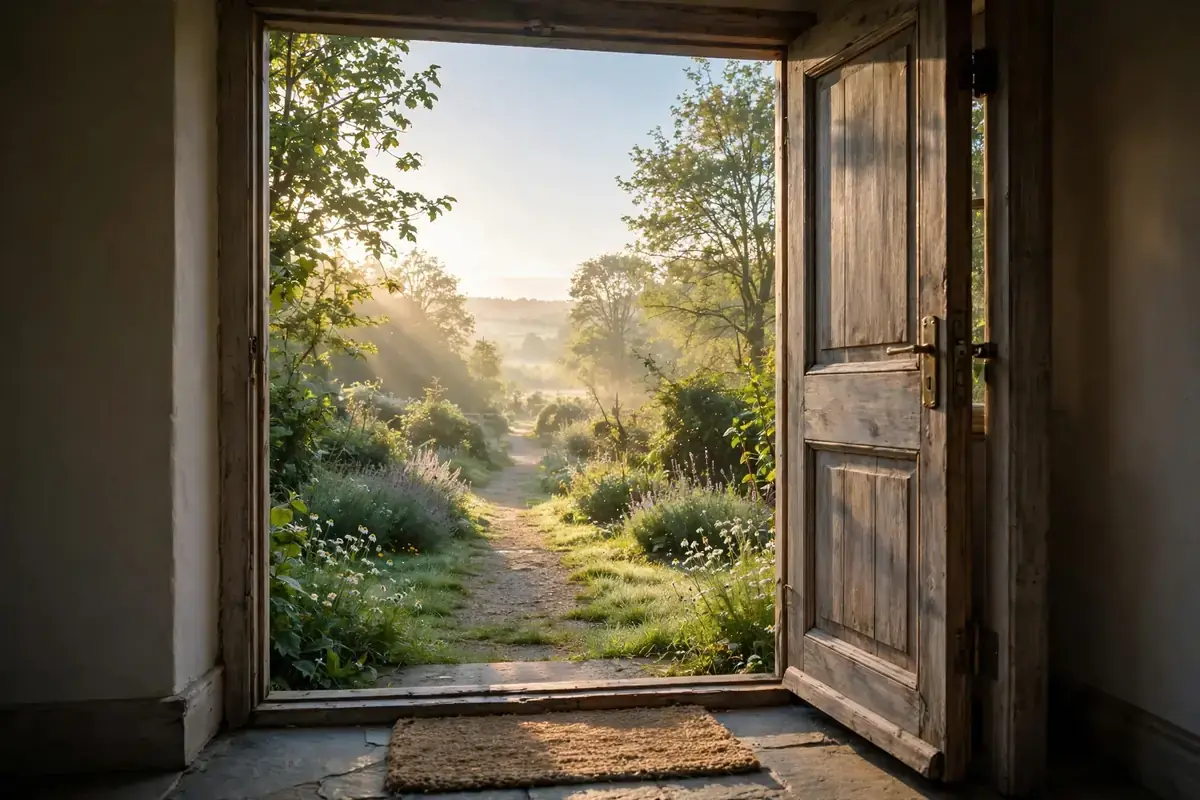
The Dua in Arabic
بِسْمِ اللَّهِ، تَوَكَّلْتُ عَلَى اللَّهِ، وَلَا حَوْلَ وَلَا قُوَّةَ إِلَّا بِاللَّهِ
Bismillahi, tawakkaltu ‘alallah, wa la hawla wa la quwwata illa billah.
In the name of Allah, I place my trust in Allah, and there is no power and no strength except with Allah.
اللہ کے نام سے، میں نے اللہ پر بھروسہ کیا، اور اللہ کے سوا کوئی طاقت اور قوت نہیں۔
Sunan Abi Dawud 5095 • Jami’ at-Tirmidhi 3426 • it is said to him: you are guided, sufficed, and protected
Meaning Explained
Three clauses, three layers of protection. Bismillah opens the outing in Allah’s name, dedicating every step of the day to Him. Tawakkaltu ‘alallah is the heart of the dua: I place my trust in Allah, which means the outcome of the day’s efforts is entrusted to Him, not to my own planning alone. This is tawakkul, the virtue the Quran praises again and again.
La hawla wa la quwwata illa billah is the crown of the dua. It means there is no power to avoid evil and no strength to do good except through Allah. The Prophet called these words a treasure from the treasures of Paradise (Sahih al-Bukhari). Saying them at the door is an admission that the day’s safety and success do not come from locks, alarms, or careful plans, but from the One who controls all of them.
The hadith adds a scene worth picturing. When the believer says this dua, it is said to him: hudita wa kufita wa wuqita, you have been guided, you have been sufficed, and you have been protected. And Shaytan, hearing this, turns away from him, while another devil says: what can you do with a man who has been guided, sufficed, and protected? The day begins with the enemy in retreat.

Virtues and Benefits
The promise of being guided, sufficed, and protected covers everything a person fears when leaving home: getting lost or going wrong (guidance), lacking what is needed (sufficiency), and facing harm (protection). No insurance policy offers all three, and none of them requires a premium. The price is a few sincere words at the door.
The dua also trains tawakkul as a daily reflex. The believer who says it every morning slowly stops believing that outcomes depend on him alone. That shift, from self-reliance to God-reliance, is one of the great transformations of the heart, and it begins at the front door. Complete the circle each evening with our dua for entering the home.
When and How to Recite
Say the dua as you leave the house, at the door itself, before getting into the car or starting the walk. Say it with presence: picture the day’s unknowns, a meeting, a journey, a task, and hand each one to Allah as you speak. If you forget at the door, say it when you remember; the habit is what matters.
Teach it to everyone in the household, especially children going to school. A child who leaves home each day under these words carries protection no parent can personally provide. Keep the morning adhkar alongside it, and the day is armored from both sides.
FAQ
What should I say when leaving the house?
Say Bismillahi, tawakkaltu ‘alallah, wa la hawla wa la quwwata illa billah: “In the name of Allah, I place my trust in Allah, and there is no power and no strength except with Allah” (Sunan Abi Dawud 5095, Tirmidhi 3426). It is said to the one who says it: you are guided, sufficed, and protected.
What does la hawla wa la quwwata illa billah mean?
It means there is no power to turn away from evil and no strength to do good except through Allah. The Prophet (peace be upon him) called it a treasure from the treasures of Paradise. It is an admission that all ability comes from Allah alone, and it appears in many of the most beloved adhkar.
Does this dua protect from accidents and harm?
The hadith promises that the one who says it is guided, sufficed, and protected, and that Shaytan turns away from him. This is a general divine protection, and the believer still takes normal precautions: locking the door, driving carefully, and planning well. Tawakkul means trusting Allah with the means, not instead of them.
Can I say this dua when leaving for travel?
Yes, it applies to every leaving, short or long, and there are additional travel duas in the Sunnah for longer journeys. Saying it at the door covers the outing whatever its length, and it pairs well with the dua for entering the home on your return.
Final Thoughts
The world outside the door is full of things you cannot control, and that is exactly why the dua works. A few words of trust, and the uncontrollable is handed to the One who controls it. Leave your home in His name each morning, and walk through the day like someone who is guided, sufficed, and protected, because you are.
Continue Reading
Complete the pair with the dua for entering the home and the morning adhkar, or browse the full collection on the Masnoon Duas hub.