ذُو الْقَرْنَيْنِ
Dhul-Qarnain: The Just King’s Three Journeys in Surah Al-Kahf
At a Glance
Surah Al-Kahf, the 18th surah of the Quran
Dhul-Qarnain, the just and powerful king
Just leadership and power used for Allah’s sake
Surah Al-Kahf 18:83–98
The Story: The King of the Two Horns
Dhul-Qarnain, “the one with two horns,” is one of the most intriguing figures in the Quran. The people of Makkah asked the Prophet Muhammad (peace be upon him) about him, and Allah answered: “I will recite to you something of his story” (18:83). The Quran presents him as a ruler whom Allah had firmly established on earth, giving him the means to every end. His story is the surah’s lesson on the trial of power: what a strong king should do with his strength.
Was he a prophet? The scholars differ, and the Quran does not settle it. The most widely held view, reported by commentators such as Ibn Kathir, is that he was a just and righteous king, not a prophet. The Quran praises his justice and his humility before Allah, and that is the point that matters: power guided by faith.
The First Journey: To the Setting of the Sun
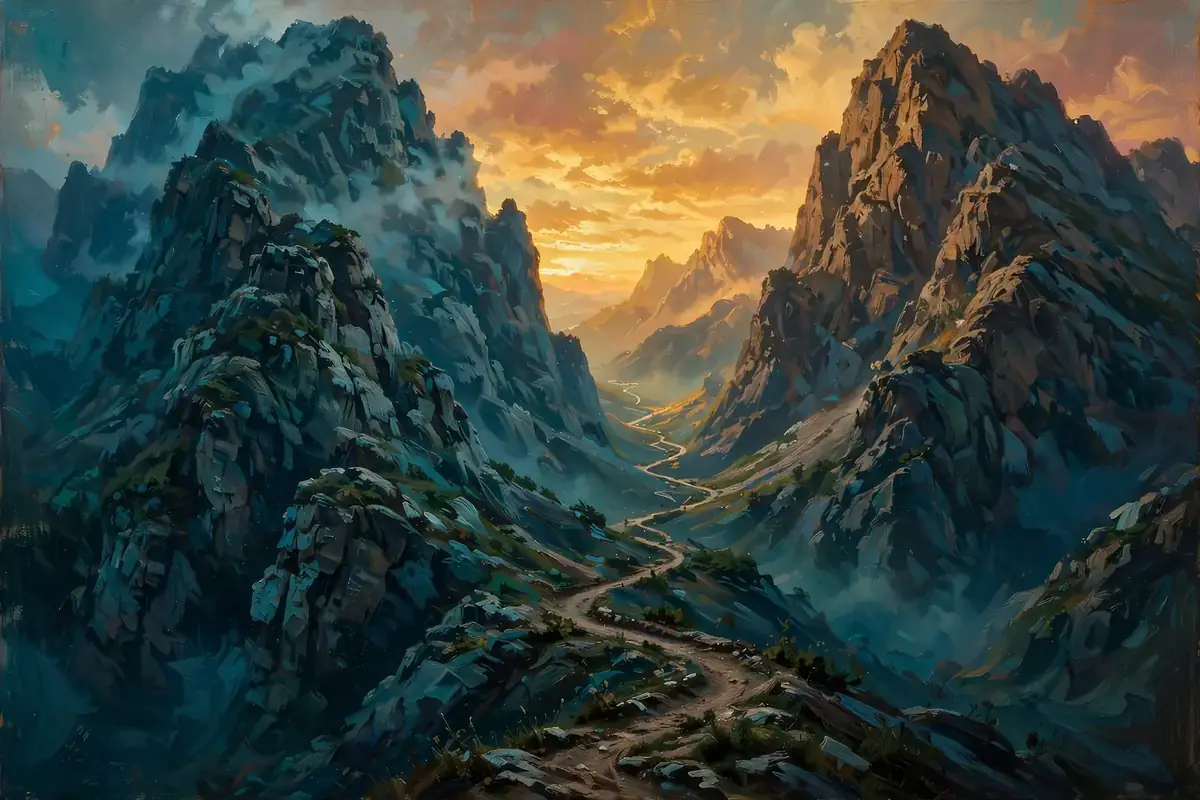
Dhul-Qarnain first traveled west, following the means Allah had given him, until he reached the place where the sun appeared to set, in a spring of murky water. There he found a people, and Allah gave him authority over them: he could punish them or treat them kindly.
His response reveals his character. He said that whoever did wrong would be punished and then returned to his Lord for an even greater punishment, but whoever believed and did righteous deeds would have the best reward, and his commands toward them would be easy and kind (18:87–88). Justice for the wrongdoer, mercy for the righteous: this was his policy, and it was rooted in accountability to Allah, not in personal whim.
The Second Journey: To the Rising of the Sun
He then traveled east until he reached the place where the sun rose over a people for whom Allah had provided no shelter from it. The Quran says little about this journey beyond that detail, and the commentators do not add much that is certain. The brevity itself is a lesson: the Quran tells us only what we need. Dhul-Qarnain passed through, Allah knew all about his affair, and he moved on to his third and most famous journey.
The Third Journey: The Barrier Against Gog and Magog
Between two mountains, Dhul-Qarnain found a people who could barely understand speech. They told him of their suffering: Gog and Magog (Ya’juj and Ma’juj) were spreading corruption in the land, raiding and destroying. They offered to pay him tribute if he would build a barrier between them and these destructive peoples.
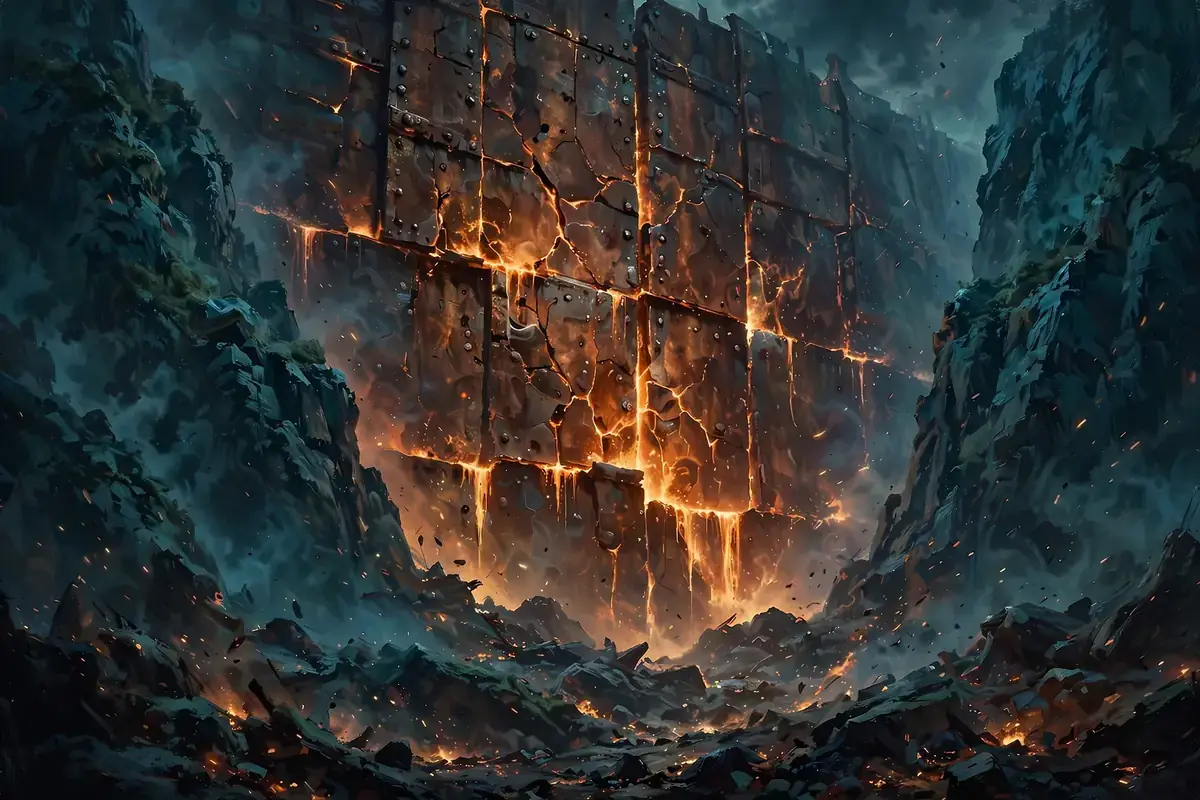
His answer is one of the finest moments of leadership in the Quran. He refused their money: “What my Lord has established me with is better than your tribute. Help me with strength instead.” Then he organized the work himself. He asked for blocks of iron, filled the gap between the two mountain cliffs, ordered the bellows to be blown until the iron glowed like fire, and then poured molten copper over it. The result was a barrier so strong that Gog and Magog could neither scale it nor dig through it.
آتُونِي زُبَرَ الْحَدِيدِ ۖ حَتَّىٰ إِذَا سَاوَىٰ بَيْنَ الصَّدَفَيْنِ قَالَ انفُخُوا ۖ حَتَّىٰ إِذَا جَعَلَهُ نَارًا قَالَ آتُونِي أُفْرِغْ عَلَيْهِ قِطْرًا
Atoonee zubaral-hadeed. Hatta idha sawa baynas-sadafayni qalanfukhoo. Hatta idha ja’alahu naran qala atoonee ufrigh ‘alayhi qitra.
Bring me blocks of iron. Then, when he had leveled them between the two mountain walls, he said: Blow with bellows. Then, when he had made it like fire, he said: Bring me molten copper to pour over it. (18:96)
میرے پاس لوہے کے ٹکڑے لاؤ۔ یہاں تک کہ جب اس نے دو پہاڑوں کے درمیان برابر کر دیا تو کہا: پھونکو۔ یہاں تک کہ جب اسے آگ کی طرح کر دیا تو کہا: میرے پاس لاؤ، میں اس پر پگھلا ہوا تانبا ڈالوں۔
The Humility After the Triumph
When the mighty barrier stood complete, Dhul-Qarnain did not boast. He said: “This is a mercy from my Lord.” And then he added something profound: when the promise of his Lord comes, He will level it to the ground, and the promise of his Lord is ever true (18:98). Even the strongest wall ever built is temporary. Only Allah’s word is permanent.
That sentence captures the whole character of Dhul-Qarnain. He used his power to protect the weak, refused payment for doing good, credited his success to Allah, and remembered that everything he built would one day return to dust. Power did not corrupt him because his heart was anchored to the One above all power.
قَالَ هَٰذَا رَحْمَةٌ مِّن رَّبِّي ۖ فَإِذَا جَاءَ وَعْدُ رَبِّي جَعَلَهُ دَكَّاءَ ۖ وَكَانَ وَعْدُ رَبِّي حَقًّا
Qala hadha rahmatun min rabbee. Fa idha ja’a wa’du rabbee ja’alahu dakka’a, wa kana wa’du rabbee haqqa.
He said: This is a mercy from my Lord. But when the promise of my Lord comes, He will make it level, and the promise of my Lord is ever true. (18:98)
اس نے کہا: یہ میرے رب کی رحمت ہے۔ پھر جب میرے رب کا وعدہ آئے گا تو وہ اسے چکنا چور کر دے گا، اور میرے رب کا وعدہ سچا ہے۔
Lessons We Learn
- Power is a trust. Dhul-Qarnain used his strength to protect the oppressed, not to enrich himself. Leadership exists to serve.
- Do good without charging for it. He refused the people’s tribute and asked only for their labor. Helping others should not be a business.
- Credit Allah for success. “This is a mercy from my Lord” is the sentence every achiever should learn. Nothing we build is truly ours.
- Justice means accountability. His policy was clear: wrongdoers face consequences, the righteous receive kindness. A just ruler fears Allah’s judgment.
- Even the greatest works are temporary. The barrier will one day be leveled. Building for this world is fine, but only Allah’s promise lasts.
- Organize and work. Dhul-Qarnain did not just pray for the people’s protection; he engineered it with iron, fire, and copper. Faith and effort go together.
Why This Story Matters Today
The Quran’s four stories in Surah Al-Kahf cover four trials: faith, wealth, knowledge, and power. Dhul-Qarnain is the answer to the trial of power. History is full of rulers who used strength to take; the Quran gives us one who used strength to give. In an age that often measures leaders by what they accumulate, Dhul-Qarnain measures them by what they protect.
His humility is the part most worth copying. Anyone who leads anything, a family, a team, a community, faces the temptation to take credit. Dhul-Qarnain’s words after his greatest achievement, “this is a mercy from my Lord,” are the antidote. The strongest king in the surah is also the most humble, and that is not a coincidence.
FAQ
Who was Dhul-Qarnain?
Dhul-Qarnain was a just and powerful king mentioned in Surah Al-Kahf 18:83–98. The Quran does not name his people or his era. The most widely held view among the classical commentators is that he was a righteous king, not a prophet. His story is the Quran’s lesson on the trial of power.
What does Dhul-Qarnain mean?
It means “the one with two horns” or “the possessor of two horns.” Scholars have suggested the name refers to his rule over the east and the west, the two ends of the earth he traveled to, or to the two horns of his helmet or crown. The Quran does not explain the name, so these remain scholarly suggestions.
Was Dhul-Qarnain Alexander the Great?
Some early commentators and historians suggested this identification, but many scholars disagree, and the Quran itself gives no identification. The Quran’s purpose is the moral lesson, not the historical identity, so the safest position is to accept what the Quran says about him without insisting on a particular historical figure.
What were Dhul-Qarnain’s three journeys?
First, he traveled west to where the sun appeared to set in a murky spring, where he established justice among a people there. Second, he traveled east to where the sun rose over a people with no shelter from it. Third, he traveled to a pass between two mountains, where he built the iron and copper barrier against Gog and Magog.
What did Dhul-Qarnain build against Gog and Magog?
He built a massive barrier of iron blocks between two mountain cliffs, heated it with bellows until it glowed like fire, and poured molten copper over it (18:96). The Quran says Gog and Magog could neither scale it nor dig through it (18:97). He refused payment for the work and called the barrier a mercy from his Lord.
What is the main lesson of Dhul-Qarnain’s story?
The main lesson is that power must serve justice and stay humble before Allah. Dhul-Qarnain protected the weak, refused tribute, credited his success to his Lord, and remembered that even his greatest work would one day be leveled. He is the Quran’s model of righteous leadership.
Final Thoughts
Dhul-Qarnain traveled to the ends of the earth and came home with the same heart: one that served the weak, refused bribes, and thanked Allah for every victory. His story closes the four great narratives of Surah Al-Kahf with a simple truth: the strongest person is the one whose strength belongs to Allah. Build your barriers, do your work, and then say with him, “This is a mercy from my Lord.”
Continue Reading
Read about Gog and Magog, the peoples Dhul-Qarnain’s barrier holds back, or the People of the Cave from the same surah. Browse all stories in the Quranic Stories hub.