
قَارُون
The Story of Qarun (Korah): When Wealth Destroys Its Owner
At a Glance
Surah Al-Kahf, the 18th surah of the Quran
Qarun, a wealthy man from the people of Musa (AS)
Wealth as a test, and the ruin of arrogance
Surah Al-Qasas 28:76–82
The Story: The Richest Man of His People
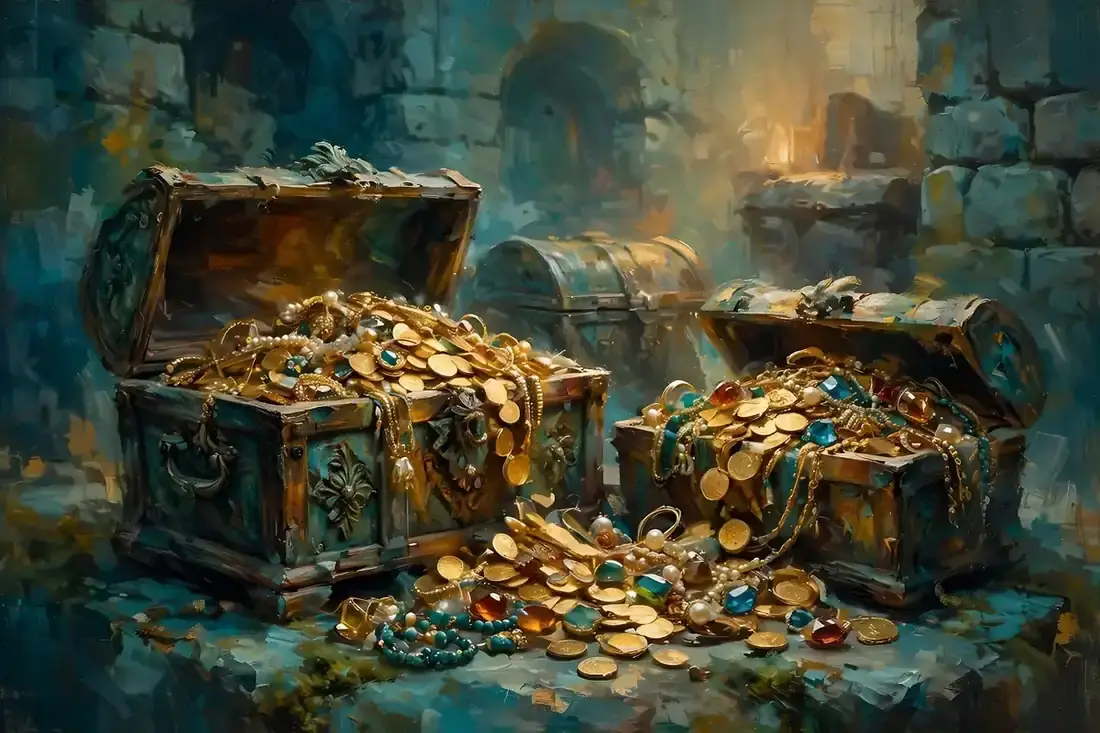
Qarun was from the people of Musa (peace be upon him). Some narrations in tafsir describe him as a relative of Musa, but the Quran introduces him simply: a man of the Children of Israel whom Allah had blessed with unimaginable wealth. His treasures were so vast that the keys to his storehouses alone were a heavy load for a group of strong men to carry.
Wealth, however, changed him. Instead of gratitude, it bred arrogance. Instead of generosity, it bred contempt for his own people. He began to oppress them and to parade his riches as proof of his superiority. The Quran’s word for his behavior is bagha, transgression, the same kind of crossing of limits that tyrants commit.
إِنَّ قَارُونَ كَانَ مِن قَوْمِ مُوسَىٰ فَبَغَىٰ عَلَيْهِمْ ۖ وَآتَيْنَاهُ مِنَ الْكُنُوزِ مَا إِنَّ مَفَاتِحَهُ لَتَنُوءُ بِالْعُصْبَةِ أُولِي الْقُوَّةِ إِذْ قَالَ لَهُ قَوْمُهُ لَا تَفْرَحْ ۖ إِنَّ اللَّهَ لَا يُحِبُّ الْفَرِحِينَ
Inna Qaruna kana min qawmi Musa fabagha ‘alayhim, wa ataynahu minal-kunoozi ma inna mafatihahu latanoo’u bil-‘usbati ulil-quwwah. Idh qala lahu qawmuhu la tafrah, innallaha la yuhibbul-fariheen.
Indeed, Qarun was from the people of Musa, but he behaved arrogantly toward them. We had granted him such treasures that even their keys would burden a group of strong men. His people said to him: Do not be prideful; indeed, Allah does not like the prideful. (28:76)
بیشک قارون موسیٰ کی قوم میں سے تھا، پھر اس نے ان پر سرکشی کی۔ اور ہم نے اسے ایسے خزانے دیے کہ ان کی چابیاں قوی لوگوں کے ایک گروہ کو اٹھانا بھی دشوار ہوتا۔ جب اس کی قوم نے اس سے کہا: اترا مت، بیشک اللہ اترانے والوں کو پسند نہیں کرتا۔
The Advice He Threw Away
His people, the righteous among them, gave him advice that reads like a complete philosophy of wealth in a single verse. They told him four things: do not exult in your riches, for Allah does not love the boastful; seek the Home of the Hereafter with what Allah has given you; do not forget your share of this world; and do good as Allah has done good to you, without spreading corruption in the land (28:77).
It was wise, balanced counsel. It did not ask him to give up his wealth or abandon the world. It asked him to use his wealth as a bridge to the Hereafter, to enjoy his lawful share without excess, and to treat others with the same kindness Allah had shown him. Qarun’s answer revealed everything about his heart: “I was only given it because of knowledge I have” (28:78). In his mind, his fortune was his own achievement, his own brilliance, his own doing. Allah had no part in it.
The Quran responds with a question that silences every version of that claim: did he not know that Allah had destroyed before him generations far stronger in power and greater in accumulation of wealth? The wicked, it adds, will not even be asked about their sins, so clear is their guilt.
The Parade and the Fall
Then came the scene the whole city watched. Qarun went out before his people in his full splendor, and the onlookers split into two groups. Those who desired the worldly life sighed, “If only we had like what Qarun has been given! He is truly a man of great fortune.” But those who had been given knowledge answered, “Woe to you! The reward of Allah is better for those who believe and do righteous deeds, and none attain it except the patient” (28:79–80).
It is a scene that repeats in every age: the crowd envies the glitter, while the wise see through it. The very next verse ended the debate forever. Allah caused the earth to swallow Qarun and his house. No party of supporters could help him against Allah, and he could not help himself. All the keys, all the treasures, all the splendor went down with him into the ground.
فَخَسَفْنَا بِهِ وَبِدَارِهِ الْأَرْضَ فَمَا كَانَ لَهُ مِن فِئَةٍ يَنصُرُونَهُ مِن دُونِ اللَّهِ وَمَا كَانَ مِنَ الْمُنتَصِرِينَ
Fakhasafna bihi wa bidarihil-ard. Fama kana lahu min fi’atin yansuroonahu min doonillahi wa ma kana minal-muntasireen.
So We caused the earth to swallow him and his home. And there was for him no company to aid him other than Allah, nor was he of those who could defend themselves. (28:81)
پس ہم نے اسے اور اس کے گھر کو زمین میں دھنسا دیا۔ پھر اللہ کے سوا اس کا کوئی گروہ نہ تھا جو اس کی مدد کرے، اور نہ وہ خود کو بچا سکتا تھا۔
The Morning After
The Quran closes the story with a detail that is almost cinematic. Those who had wished for Qarun’s position just the day before woke up saying: “Ah! It is Allah who extends provision to whom He wills of His servants and restricts it. Had Allah not been gracious to us, He would have caused the earth to swallow us too. Ah! The disbelievers will never succeed” (28:82).
Envy had turned to gratitude overnight. The very people who had said “if only we had what Qarun has” were now thanking Allah that they did not. It is one of the Quran’s most powerful illustrations of how quickly worldly admiration collapses when the truth appears.

Lessons We Learn
- Wealth is a test, not a trophy. Qarun’s riches were given to him by Allah, but he treated them as his own achievement. Every blessing is an exam.
- Arrogance is the fastest road to ruin. “I earned it myself” is the sentence that sealed Qarun’s fate. Gratitude would have saved him.
- Use wealth as a bridge, not a wall. His people’s advice stands for all time: seek the Hereafter with your wealth, enjoy your lawful share, do good, and do not corrupt.
- Do not envy the glitter. The crowd wished for Qarun’s fortune one day and thanked Allah they did not have it the next. What shines is not always good.
- No wealth can buy help against Allah. When the earth swallowed him, none of his riches, servants, or admirers could save him.
- Provision is in Allah’s hands. He gives abundantly to whom He wills and restricts for whom He wills, and both are by His perfect wisdom.
Why This Story Matters Today
Qarun’s story is the Quran’s answer to the culture of flaunting wealth. Social feeds today are full of people parading their fortunes, and the crowd still sighs, “If only we had what they have.” The Quran does not condemn wealth itself; it condemns what wealth does to the heart when gratitude is missing. The question is never how much you have, but what your wealth makes you believe about yourself.
The four-part advice of Qarun’s people is also a practical financial ethic for believers: earn lawfully, enjoy your share without extravagance, spend for the Hereafter, and let your wealth do good instead of harm. A Muslim millionaire who lives by 28:77 is the opposite of Qarun, and the Quran honors such people, not the ones who merely accumulate.
FAQ
Who was Qarun in the Quran?
Qarun was a man from the people of Musa (peace be upon him) who was blessed with enormous wealth but became arrogant, oppressed his people, and credited his fortune to his own knowledge. Allah caused the earth to swallow him and his house as punishment (28:76–81). Some narrations say he was Musa’s relative, but the Quran identifies him simply as one of Musa’s people.
How rich was Qarun?
The Quran describes his wealth with a striking image: the keys to his treasures were so heavy that they burdened a group of strong men (28:76). This is not a figure in coins but a picture of abundance beyond ordinary measure, meant to show that no amount of wealth can protect a person from Allah’s judgment.
What was Qarun’s mistake?
His core mistake was ingratitude wrapped in arrogance. When advised to use his wealth for good, he said, “I was only given it because of knowledge I have” (28:78), denying that it was Allah’s favor. He also oppressed his people and flaunted his riches. The Quran presents him as the archetype of wealth without gratitude.
What advice did Qarun’s people give him?
They gave him four pieces of advice in 28:77: do not exult, for Allah does not love the boastful; seek the Home of the Hereafter with what Allah has given you; do not forget your share of this world; and do good as Allah has done good to you, without spreading corruption. He rejected it all.
How did Qarun die?
Allah caused the earth to swallow him and his house (28:81). No one could help him and he could not help himself. The Quran then describes those who had envied him waking up grateful that they had not shared his fate (28:82).
Is Qarun the same as Korah in the Bible?
The name Qarun corresponds to Korah (Qorah). The Quranic account focuses on his wealth, arrogance, and being swallowed by the earth, which parallels the biblical account of Korah’s rebellion ending with the earth swallowing him. The Quran presents the story with its own emphasis: wealth as a divine test and the ruin of pride.
Final Thoughts
Qarun had everything and lost everything, not because he was rich, but because his riches convinced him he needed no one, not even Allah. His story stands in the Quran as a warning carved in stone: wealth is a trust, and the trust is kept with gratitude, generosity, and humility. The next time success tempts you to say “I earned this myself,” remember the man whose keys took strong men to carry, and whom the earth swallowed in a moment.
Continue Reading
Read the story of Bilqis, Queen of Sheba, whose wealth led her to Allah instead of away from Him, or the Golden Calf. Browse all stories in the Quranic Stories hub.