
أَصْحَابُ الْفِيلِ
The Owners of the Elephant (Ashab al-Fil): How Allah Protected the Kaaba
At a Glance
Surah Al-Fil, the 105th surah of the Quran
Abraha, his army, and Abdul Muttalib
Allah’s protection of the Kaaba and the defeat of arrogance
Surah Al-Fil 105:1–5
The Story: An Army Marches on Makkah
Around the year of the Prophet Muhammad’s birth (peace be upon him), the Abyssinian governor of Yemen, Abraha, built a grand church in Sana’a and wanted to turn the pilgrimage of the Arabs away from the Kaaba toward it. When that failed, his wounded pride pushed him further: he would march on Makkah and destroy the Kaaba itself. This background comes from classical seerah and tafsir accounts, such as those of Ibn Ishaq and Ibn Kathir, which fill in the history behind the short surah.
Abraha set out with a large army that included war elephants, a weapon the Arabs had never faced. The tribes along the way could not stop him. When his forces reached the outskirts of Makkah, they seized herds of camels belonging to the people of the city, including two hundred camels of Abdul Muttalib, the respected chief of Makkah and the Prophet’s grandfather.
Abdul Muttalib went to Abraha’s camp to speak with him. When Abraha asked what he wanted, Abdul Muttalib asked only for his camels back. Abraha was taken aback: he expected the chief of Makkah to plead for the Kaaba. Abdul Muttalib answered with words that have echoed through history: “I am the owner of the camels, and the House has its own Lord who will protect it.”
The people of Makkah then left the city and took shelter in the mountains, leaving the Kaaba in the hands of its Lord. They had no army to match Abraha’s, no elephants of their own, and no plan beyond trust in Allah.
The Miracle: Birds Against an Army
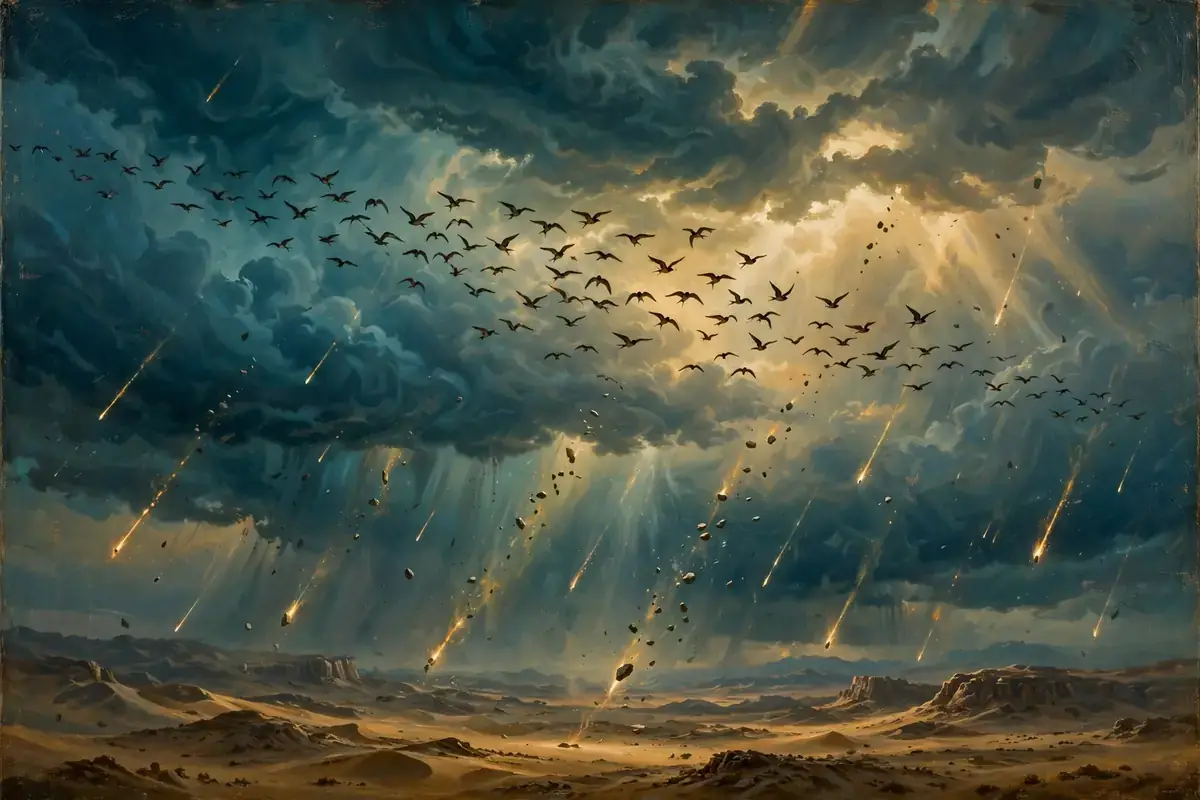
When Abraha gave the order to advance, something strange happened. The great lead elephant, which the narrations call Mahmud, refused to move toward Makkah. Turned in any other direction, it walked; pointed at the Kaaba, it sat down and would not budge. The army was still deciding what to do when the sky darkened.
Allah sent flocks of birds, ababil, against them. Each bird carried stones of baked clay, sijjil, and dropped them on the soldiers. The Quran describes the result in one devastating image: the mighty army was left like eaten straw, devoured crop stalks chewed down to nothing. Not a single sword was raised by the people of Makkah. Allah defended His House Himself.
أَلَمْ تَرَ كَيْفَ فَعَلَ رَبُّكَ بِأَصْحَابِ الْفِيلِ
Alam tara kayfa fa’ala rabbuka bi-as-habil-feel.
Have you not considered how your Lord dealt with the companions of the elephant? (105:1)
کیا تم نے نہیں دیکھا کہ تمہارے رب نے ہاتھی والوں کے ساتھ کیا کیا؟
أَلَمْ يَجْعَلْ كَيْدَهُمْ فِي تَضْلِيلٍ
Alam yaj’al kaydahum fee tadleel.
Did He not make their plot go astray? (105:2)
کیا اس نے ان کی چال کو ناکام نہیں بنا دیا؟
وَأَرْسَلَ عَلَيْهِمْ طَيْرًا أَبَابِيلَ
Wa arsala ‘alayhim tayran abaabeel.
And He sent against them birds in flocks. (105:3)
اور اس نے ان پر پرندوں کے جھنڈ بھیجے۔
تَرْمِيهِم بِحِجَارَةٍ مِّن سِجِّيلٍ
Tarmeehim bihijaratin min sijjeel.
Striking them with stones of baked clay. (105:4)
جو ان پر سخت مٹی کے پتھر برساتے تھے۔
فَجَعَلَهُمْ كَعَصْفٍ مَّأْكُولٍ
Faja’alahum ka’asfin ma’kool.
And He made them like eaten straw. (105:5)
پس اس نے انہیں کھائے ہوئے بھوسے کی طرح کر دیا۔
Why It Happened in the Year of the Prophet’s Birth
The timing is not a coincidence, and the scholars of tafsir point this out with care. Ibn Kathir explains that Allah defended the Kaaba not because of any status the Quraysh had over the Abyssinians, but because He was preparing the way for His final Messenger. The Prophet (peace be upon him) was born in that same year, which is why the Arabs called it ‘Am al-Fil, the Year of the Elephant.
The message to the Quraysh was clear: the House whose Lord destroyed an army for its sake was about to be honored by the coming of the unlettered Prophet. The surah that follows Al-Fil, Surah Quraysh, ties the two together: “For the accustomed security of the Quraysh… let them worship the Lord of this House, who has fed them against hunger and made them safe from fear” (106:1, 3–4).

Lessons We Learn
- Allah defends what is sacred. The Kaaba had no army guarding it, yet no power on earth could harm it once Allah decided to protect it.
- Arrogance invites destruction. Abraha’s army was the strongest force in the region, but strength without truth is fragile before Allah’s will.
- Small means can defeat great armies. Birds carrying small stones destroyed what swords and elephants could not. Allah does not need our weapons to give victory.
- Trust like Abdul Muttalib’s. “The House has its own Lord who will protect it” is the model of tawakkul: do what you can, then hand the matter to Allah.
- Victories prepare the way for greater blessings. The Year of the Elephant cleared the stage for the birth of the Prophet Muhammad (peace be upon him).
Why This Story Matters Today
Every believer at some point faces a force that looks unbeatable: an oppressive system, a personal crisis, a problem with no human solution. The story of the Elephant is the Quran’s reminder that no power is greater than Allah’s, and that He can turn the smallest of His creation into the instrument of the greatest victories.
It is also a story about timing. The Quraysh did not know that their rescue was the opening chapter of something far bigger, the coming of the final Prophet. When Allah protects you from a disaster, it may be because He has plans for you that you cannot yet see. Gratitude, not complacency, is the right response.
FAQ
Who was Abraha in the story of the Elephant?
Abraha was the Abyssinian governor of Yemen. According to the seerah and tafsir accounts, he built a grand church in Sana’a to draw pilgrims away from the Kaaba. When the Arabs kept going to Makkah, he marched with an army and war elephants to destroy the Kaaba, but Allah destroyed his army instead.
What are the Ababil birds mentioned in Surah Al-Fil?
Ababil means flocks of birds. The Quran says Allah sent them against Abraha’s army, striking the soldiers with stones of sijjil, baked clay. The narrations describe each bird carrying stones that destroyed whatever they struck. They were the instrument of Allah’s punishment, small in size but devastating by His command.
What is the Year of the Elephant?
The Year of the Elephant (‘Am al-Fil) is the year Abraha’s army was destroyed, and it is also the year the Prophet Muhammad (peace be upon him) was born, according to the most well-known opinion. The Arabs used this famous event as a reference point for dating, the way other nations use calendars.
Did the elephant really refuse to walk toward Makkah?
This detail comes from the seerah and tafsir narrations, not from the Quran itself. The reports say the lead elephant, called Mahmud, would not advance toward the Kaaba but walked freely in any other direction. The Quran itself only mentions the army’s destruction by the birds. The elephant’s refusal is a well-known part of the traditional account.
What did Abdul Muttalib say to Abraha?
When Abraha expected him to plead for the Kaaba, Abdul Muttalib asked only for his seized camels back and said, “I am the owner of the camels, and the House has its own Lord who will protect it.” His words are remembered as a perfect example of trust in Allah: he took care of what was his responsibility and left the Kaaba’s defense to its Lord.
What is the main lesson of Surah Al-Fil?
The main lesson is that Allah protects His sacred House and defeats the plots of the arrogant, no matter how strong they seem. Ibn Kathir adds a deeper point: this was a sign preparing the way for the Prophet’s birth. It teaches believers that no worldly power can stand against Allah’s will.
Final Thoughts
An army that terrified all of Arabia was reduced to eaten straw by birds carrying pebbles. That is the whole story of the Elephant in one sentence, and it is enough. When the problem in front of you looks like Abraha’s army, remember who stood behind the Kaaba that day. The House had its Lord then, and your affairs have their Lord now. Trust Him the way Abdul Muttalib did, and leave the outcome to the One who never loses.
Continue Reading
Read the story of Talut and Jalut, another Quranic battle won by faith against a mighty army, or the People of the Ditch. Browse all stories in the Quranic Stories hub.